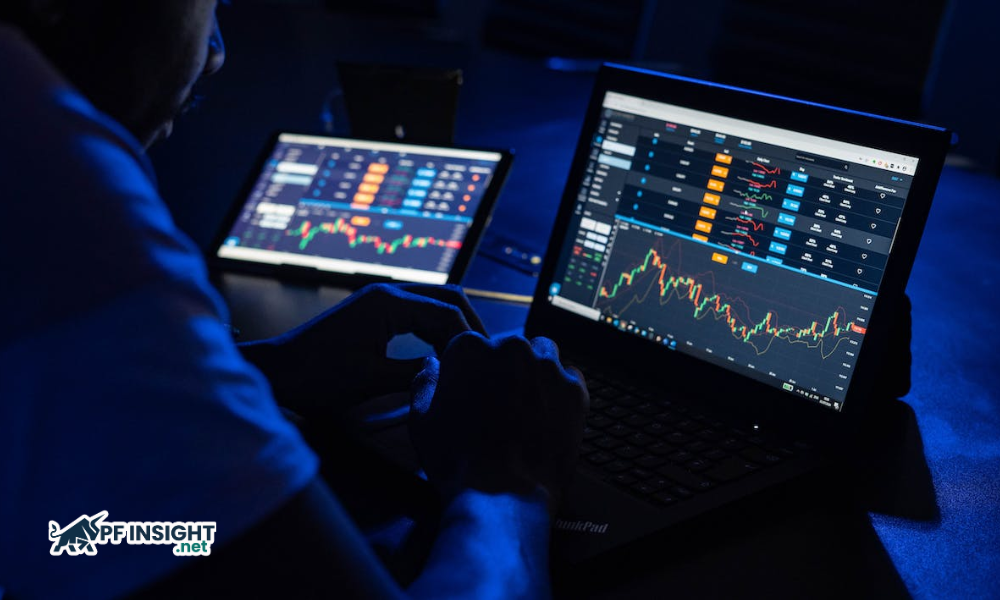
What is forex trading? This is the activity of buying and selling currencies on the foreign exchange market with the aim of making a profit from the change in exchange rates. Although attractive, forex also has many risks for those who lack knowledge and experience. When understanding how the market works and understanding the influencing factors, traders will easily build more effective strategies.
Forex trading is the process of exchanging two different currencies. When you place an order, you simultaneously sell one currency and buy another in the same pair. The goal is to take advantage of the fluctuations in the exchange rate to seek profit.
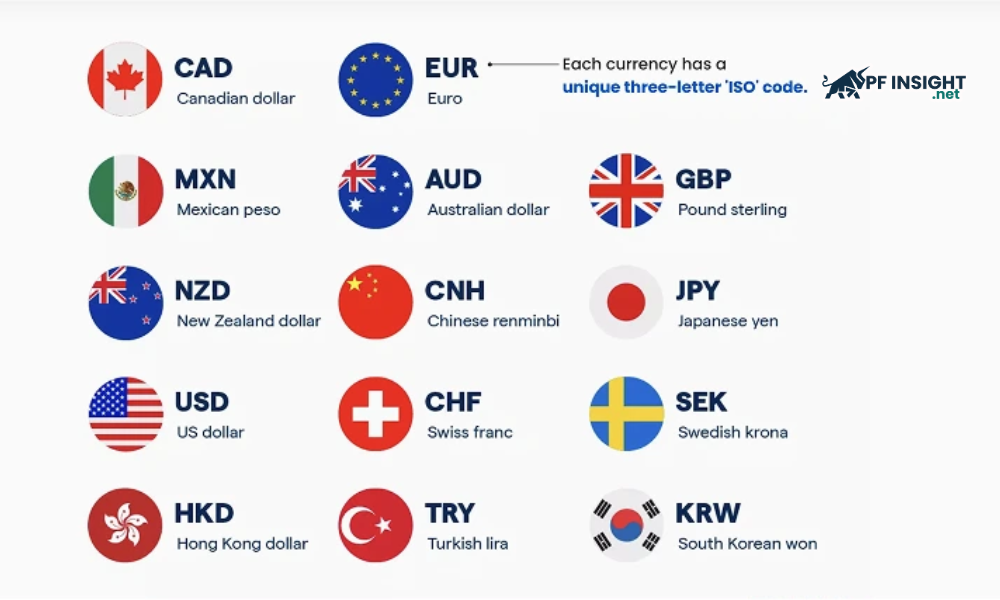
In forex, currencies are represented by three-letter codes, with two letters indicating the country or region and the last letter indicating the currency name. For ease of classification, exchanges often divide currency pairs into different groups according to their characteristics and popularity.
How forex trading works
What is forex trading -How forex trading works
The forex market does not operate through a centralized exchange like stocks. Instead, all transactions take place through the OTC system, where parties directly exchange with each other. This makes the market much more continuous and flexible.
Forex is regulated by a global network of institutions, mainly concentrated in four major trading centers: London, New York, Sydney and Tokyo. Due to its decentralized operation and spread across multiple time zones, the market is open 24 hours a day, 5 days a week, providing maximum flexibility to participants.
The foreign exchange market operates across multiple time zones, creating a continuous flow of transactions across the globe. Initially, this market was dominated by large banks and financial companies as intermediaries. However, with the development of technology and online platforms, forex has expanded, allowing individual traders and retail investors to easily access and participate in this huge market.
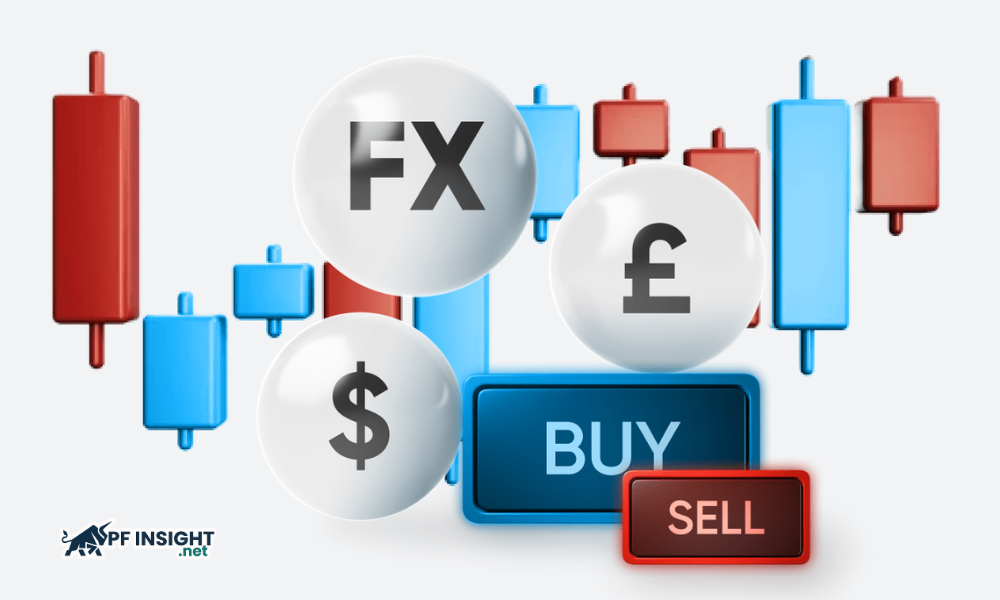
Forex trading is simply the process of buying and selling currency pairs. You exchange one currency for another. The goal is to predict the correct direction of the price movement: sell the currency that is expected to decrease in value and buy the currency that is expected to increase in value, thereby making a profit from the difference in exchange rates.
Classification of foreign exchange market
Understanding the different types of forex markets is essential for beginners to grasp how they work and choose the right trading strategy.
Spot market
This is the market where currency transactions are made immediately or in a short period of time, usually completed within two business days. This is the most common form of “spot” exchange in forex.
Forward market
The forward market allows parties to buy and sell currencies at an agreed price, but with settlement occurring at a future date. This type of market helps businesses and investors protect against exchange rate fluctuations. Forward contracts are flexible and offer effective foreign exchange risk management.
Futures market
The futures market is similar to forwards but with standardized contracts and traded on a regulated exchange. These contracts fix the price of a currency at a specified future date, creating a more structured environment than the forwards market.
Options market
The options market allows traders to decide to buy or sell currencies at a fixed price before a certain date without being obliged to do so. This provides flexibility, helps them manage potential risks and keeps the option open to take advantage of price fluctuations in the forex market.
Basic concepts in forex that traders should know
What is forex trading? Forex terms are an important tool for beginners to understand the market. You can use this list as a dictionary for quick reference when needed to apply in real trading.
Basic concepts in forex that traders should know
Currency pairs
A currency pair is a combination of two currencies that are traded together. There are many currency pairs in the market, but the most popular are EUR/USD, USD/JPY and GBP/USD. Understanding the characteristics of each pair helps investors predict exchange rate movements and maximize profits.
Base currency and quote currency
In a Forex currency pair, the base currency is always on the left, while the quote currency is on the right. The value of the base currency is always calculated as 1, while the quoted currency represents the current price, indicating how many units of the quoted currency are needed to buy one unit of the base currency. When trading, traders always take the action of selling one currency to buy another, taking advantage of exchange rate fluctuations to make a profit.
Pip
A pip in forex trading is typically a one-digit change to the fourth decimal place in a currency pair. For example, GBP/USD from 1.35361 to 1.35371 represents one pip. Currency pairs involving JPY measure pips to the second decimal place. When the price changes to the fifth decimal place, this is called a pipette, which helps traders identify small fluctuations and manage trades more accurately.
Lot
Forex trading uses lots to standardize currency transactions. Since price fluctuations are usually small, lots are large in size. The market offers four main types of lots:
Standard lot: Represents 100,000 units of base currency.
Mini lot: Represents 10,000 units of base currency.
Micro lot: Represents 1,000 units of base currency.
Nano lot: Represents 100 units of base currency.
Spread
The spread is the difference between the buy and sell price of a currency pair. For example, the buy price is 1.3428 and the sell price is 1.3424. For a trade to be profitable, the market must move in your favor: up if you buy, down if you sell, to overcome this spread.
Leverage
Leverage allows you to increase your exposure to financial markets without having to invest a lot of capital. When trading with leverage, you don’t have to pay the full value of the trade upfront. Instead, you only need to deposit a small amount of money, called margin. When you close a leveraged position, your profit or loss will be based on the full value of the trade.
Using leverage increases profits quickly but also increases the risk of loss, which can exceed the deposited capital. Therefore, traders need to understand and apply effective risk management methods to protect their accounts and limit losses when the market fluctuates strongly.
Margin
Margin is the initial amount of money required to open and maintain a leveraged trading position. It is a small but important capital that allows traders to access larger positions. Margin levels vary depending on the size of the trade and the policies of each broker.
Margin is usually determined as a percentage of the total position value. For example, to open a $10,000 EUR/USD trade, you might only need to deposit 2%, or $200. This allows you to access a large position with low initial capital, but still risk the entire position.
Factors affecting forex rates
Factors affecting forex rates
What is forex trading? Since forex involves many global currencies, predicting exchange rates is challenging due to the influence of many factors. However, like other financial markets, forex is largely driven by supply and demand, so understanding the variables at play is extremely important.
Central Banks: The value of a currency is largely determined by the supply managed by the Central Bank, and their policy decisions have the power to significantly alter the market, an example being quantitative easing, an act of increasing the amount of money in circulation, which typically puts downward pressure on the currency as it increases the total supply of available currency.
News reports: Investors and commercial banks tend to focus capital on potential economies. When demand exceeds supply, the currency appreciates. Conversely, bad economic news can reduce capital flows and drag down the currency. Therefore, currency fluctuations directly reflect the economic situation of that country or region.
Market sentiment: Market sentiment, often driven by news, can have a strong influence on currency values. When traders believe a currency will move in one direction, they trade accordingly, causing many others to follow suit, reducing demand in the market.
Economic data: Economic data such as inflation, GDP, production or retail sales strongly influence currency price fluctuations. They not only reflect the actual state of the economy but also help predict the next policies of the central bank, thereby affecting the value of the currency in the market.
Credit rating: Credit ratings help investors assess risks when making investment decisions. In addition to interest rates and economic data, they look at credit ratings to choose where to invest their capital, in order to maximize profits while minimizing risks in the foreign exchange market.
Popular types of strategies in forex trading
To trade Forex effectively, especially when you are just starting out, you need to have a clear strategy. Here are some basic strategies to help traders navigate their trades, manage risk, and build a solid foundation in the forex market.
Scalping trading: Scalping is a short-term trading strategy that focuses on profiting from small price movements. Traders typically hold positions for only a few minutes or seconds, taking advantage of rapid market changes to make continuous profits.
Swing trading: This is a medium-term strategy, holding positions for several days to several weeks to take advantage of moderate price movements. Traders use a combination of technical and fundamental analysis to help optimize profits over the medium term.
Position trading: A long-term trading method, with positions held for weeks, months or years. This strategy focuses on long-term trends, helping traders exploit large market fluctuations and achieve stable profits over time.
Breakout trading: Breakout strategies aim to take positions when a currency pair breaks out of a certain pattern or range, such as a triangle or horizontal channel. The goal is to enter the new trend direction early, taking advantage of the initial bullish or bearish momentum to maximize profits.
Range trading: Range trading requires traders to identify the price levels where the currency pair fluctuates between its highest and lowest points, called resistance and support. This strategy aims to buy low and sell high, taking advantage of price movements within a defined range to maximize profits.
Forex trading beginners guide
Forex trading beginners guide
Here is a simple guide to help you get into the forex market and understand what forex trading is to start your trading journey more effectively.
Choosing a reputable broker: When starting to trade forex, the first thing you need to do is choose a reputable broker. Prioritize brokers that are regulated by a reputable financial authority, have an easy-to-use platform, and support learning materials for beginners. At the same time, you should consider the currency pair portfolio, transaction fees, and spreads to ensure that they suit your trading style and goals.
Register and activate your account: Once you have identified a reputable broker, you need to open a trading account. Brokers often offer a variety of account options to meet the needs of each group of investors. Beginners should prioritize using a demo account, as it allows you to practice, test market reactions, and learn how to manage transactions without incurring real costs or risks.
Mastering the forex market: To trade effectively, you must have a firm grasp of the basics of the market. Start by understanding what forex trading is and important concepts such as pips, spreads, leverage, and margin. Once you are familiar with how it works and what influences prices, it will be easier for you to build a suitable strategy.
Develop a trading strategy: A comprehensive trading plan will help you stay disciplined and avoid getting caught up in market volatility. Determine your long-term goals, your risk tolerance, and a trading approach that suits your style. Once you have established your rules, stick to them to ensure that all decisions are based on logic rather than emotion.
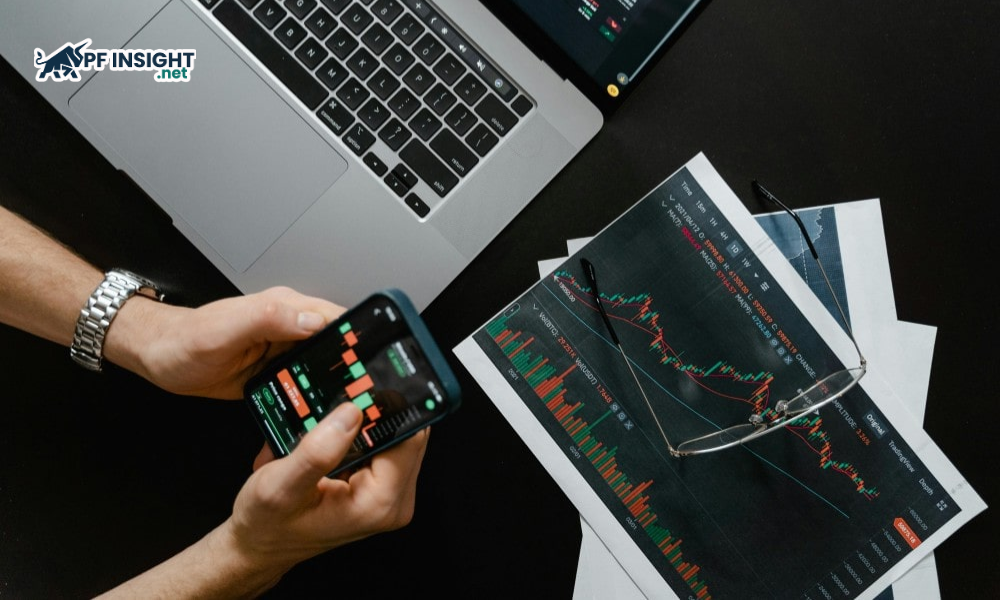
Detailed market analysis: The analysis process involves using techniques to decode price structures and signals from indicators, while also monitoring economic factors, macro data and news that affect currencies. This combination helps traders grasp a more comprehensive market picture, supporting the development of more accurate and well-founded trading strategies.
Monitoring the performance of open positions: After placing an order, close monitoring is mandatory to manage risk. The market is always changing, so traders need to be ready to adjust positions if unexpected fluctuations occur. Regular updates on economic information, policies and market news will help you maintain an effective and safe strategy.
Conclude
To answer the question what is forex trading, you need to understand the mechanism of buying and selling currency pairs and the factors that influence price fluctuations. PF Insightadvises traders to combine technical and fundamental analysis with proper risk and money management. By applying smart strategies, you can optimize profits and control risks in forex trading.