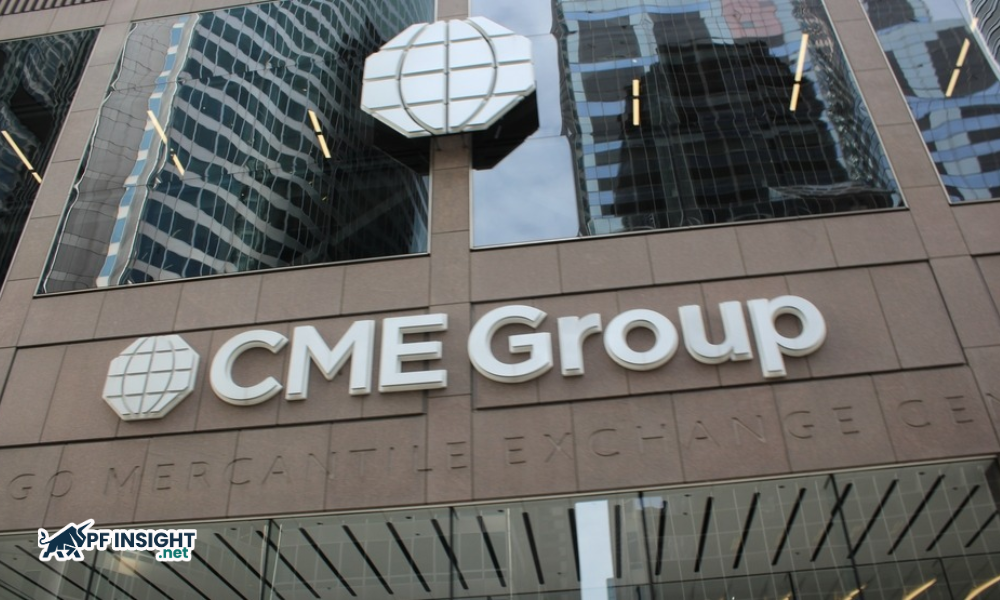
CME Group has fined Tanius Technology $150,000 for placing excessively large Treasury bond futures orders that far exceeded its immediate liquidity capacity. This behavior was deemed a violation of the exchange’s capital safety and risk management regulations.
CME imposes a $150,000 fine on Tanius technology
During the period of 2020-2022, Tanius Technology was found to have violated CBOT trading rules. Specifically, the company placed numerous buy orders with maximum volume at the preferred price on the spread order book for 2-, 5-, and 10-year Treasury bonds when the market transitioned maturities. The Business Conduct Monitoring Board assessed this as a serious violation of maintaining market transparency and fairness.
Tanius used a pro-rata order matching algorithm to gain market share over passive traders. However, the size of these orders exceeded its risk management capabilities. If all pending orders were matched simultaneously, the margin obligation would immediately far exceed the net liquidation value in the account. This indicated that the company had bet beyond its actual financial resources at the time.
The council concluded that Tanius’s conduct constituted a serious violation of CBOT rules. Specifically, these actions went against the principles of fair and equitable trading. The ruling affirmed that placing risky orders harmed the common good and welfare of the exchange, violating mandatory ethical business standards.
A breakdown of different prop trading models
CME imposes a $150,000 fine on Tanius technology
Tanius represents an institutional proprietary trading model, where the company trades its own capital and adheres to the standards set by the CME Group. This model is completely different from individual trading platforms like FTMO or FundedNext.
The core difference lies in the fact that individual platforms offer bidding and funding programs for small retail investors, while companies like Tanius are large financial institutions that participate directly in the flow of the futures market.
The adoption of standardized institutional identity verification shows FTMO is shifting towards a broader B2B strategy. Instead of just serving retail investors, the platform is building a solid foundation to penetrate deeper into the professional corporate client segment.
Recent data shows that proprietary brokers in South Asia have a return on investment six times faster than the US market, averaging just one month. The performance of individual investors here is exceptional, with some regions recording returns on advertising budgets as high as 12 times. This demonstrates the strong appeal and growth potential of the retail client segment in this region.
According to Prop Firm Match, retail proprietary brokers paid out approximately $325 million to traders in 2025. However, the actual total spending may be higher as this figure does not include reports from some of the larger brands in the market.
Second regulatory action targets California-based firm
Tanius used a pro-rata order matching algorithm to gain market share over passive traders.
Although not admitting to wrongdoing, Tanius agreed to pay the fine to close the case. Notably, this was their second legal trouble with CME Group since 2025. In May of that year, the company was fined $95,000 for wash trading.
This error stemmed from the system’s continuous automatic matching of opposing orders for the same type of Treasury bond futures contract. The repeated occurrences in such a short period indicate unresolved flaws in Tanius’ trading algorithm.
Tanius’s control system revealed flaws when its anti-money laundering function was not consistently applied. This shortcoming, combined with a lack of seamless internal communication, caused the algorithms to automatically match buy and sell orders for seven months in 2023.
The violations were concentrated in the 10-year bond futures and Ultra bond futures contracts. The unusually high frequency of auto-execution indicated that the company’s trading strategies operated without technical oversight, violating the exchange’s fair play principles.
CME Group is expanding its portfolio by partnering with FanDuel to offer event-based contracts, alongside its traditional financial assets. However, this new direction is facing intense scrutiny from regulators. The central question is whether these sports prediction-based products are truly financial instruments or a form of disguised gambling.
For more information about Prop Firm, visit our website regularly!