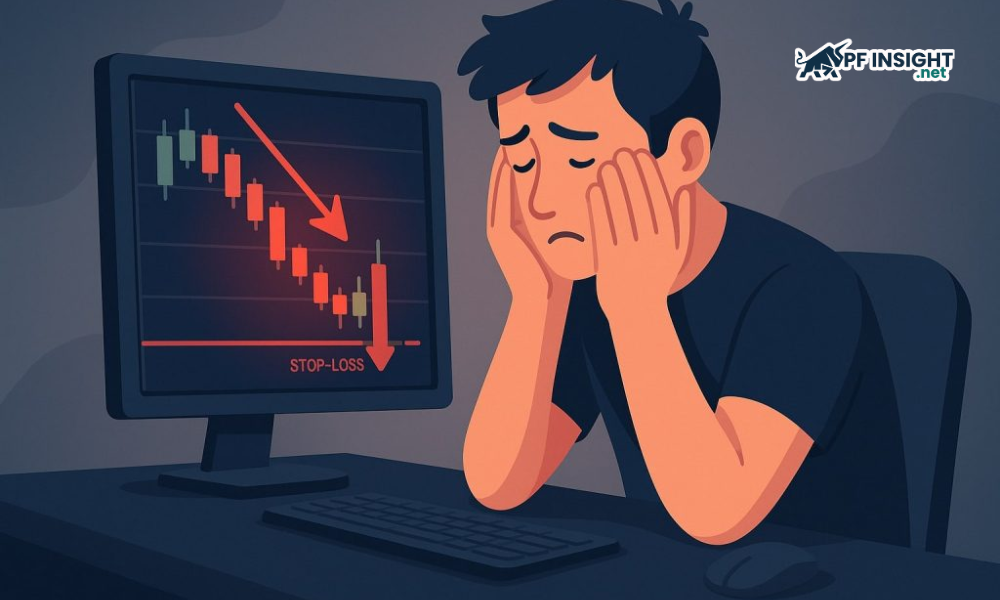
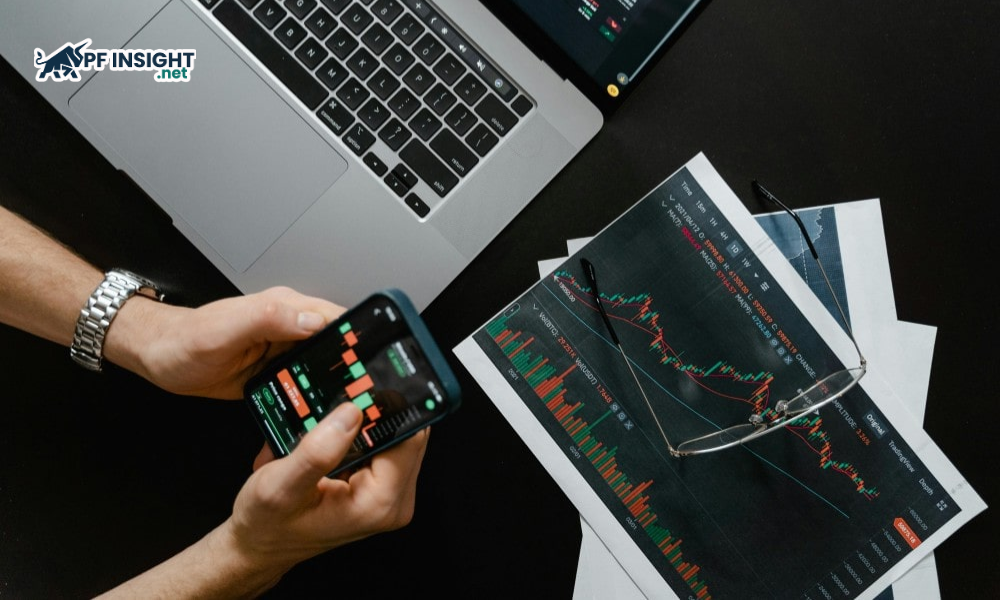
Stop hunting trading is a concept frequently mentioned when traders feel the market “sweeps their stop loss” and then quickly reverses. In reality, this is not random behavior but reflects how large amounts of money seek liquidity at key price levels. Understanding stop hunting trading helps traders avoid impulsive entry and better utilize liquidity sweeps to trade in higher-probability directions.
What is a stop hunt?
Stop hunting is a phenomenon where the price is rapidly pushed towards areas with a high concentration of stop-loss orders, aiming to eliminate weaker traders from the market. When stop-loss orders are triggered simultaneously, liquidity increases sharply and prices often fluctuate very quickly. This is the moment when large amounts of money take advantage to enter or exit trades at more optimal prices.
The triggering of mass stop-loss orders makes price action faster and stronger, due to the continuous influx of additional orders into the market. This phase creates opportunities for traders to enter buy orders at better price levels or follow the momentum to enter short-term positions.
How does stop hunt work in trading?
How does stop hunt work in trading?
Understanding the mechanism of stop hunt trading helps traders correctly understand price behavior and avoid unnecessary stop sweeps. Below are common ways stop hunts appear in the market.
Identifying key price zones: During the trading process, large institutions often focus on critical price levels such as round numbers, previous highs and lows, or technical support and resistance zones where a significant number of market stop-loss orders tend to accumulate. These areas represent high-liquidity zones and frequently become primary targets during liquidity-hunting phases in the market.
Triggering price movement: Once these zones are identified, price is deliberately guided to move in a specific direction. Whether driven by institutional intent or natural market reactions, this movement aims to trigger a large number of stop-loss orders, thereby generating sharp volatility and injecting additional liquidity into the market.
The cascading effect of stop-loss orders: As price approaches key levels, a chain reaction of order execution begins, commonly referred to as stop hunting. Multiple stop-loss orders are triggered almost simultaneously, causing a sudden surge in order flow and leading to rapid, aggressive price movements within a short period of time.
Liquidity exploitation and market reaction: After stop-loss orders are triggered, the market enters a liquidity sweep trading phase, during which the surge in available liquidity is exploited by large participants to enter or exit positions at optimal prices. This sequence of actions forms the core of stop-hunt strategies and is commonly employed by institutions as part of a broader smart money approach.
Who is involved in stop hunt trading?
Who is involved in stop hunt trading?
Stop hunt trading reflects a clear imbalance between institutional traders and retail traders in terms of capital, technology, and access to liquidity. Without proper preparation, individual traders can easily become victims of stop-loss sweeps. Therefore, equipping oneself with knowledge of price action, a solid understanding of liquidity and market structure, along with strict risk management, forms a critical foundation for achieving more sustainable trading performance.
Financial institutions and experienced traders: Stop hunt trading reflects a clear difference in capabilities between institutional traders and retail investors. With abundant capital and modern analytical tools, institutions can proactively create large price fluctuations, triggering numerous stop-loss orders in the market. This volatility becomes a key factor in helping them exploit liquidity and consolidate their trading advantage.
Hedge Funds: Among the institutions participating in the market, hedge funds stand out due to their ability to use stop hunt trading as part of their overall strategy. Through automated trading systems and advanced analytical models, they can identify areas where many stop losses are concentrated and guide the price to those areas. From the high volatility created, hedge funds take advantage of opportunities to enter trades with a clearer advantage.
Algorithmic trader: An algorithmic trader uses automated trading software combined with complex algorithms to continuously analyze the market. With the ability to react quickly to changes in price and liquidity, these systems help algorithmic traders exploit short-term opportunities. Especially during periods of high volatility caused by stop-loss triggers, they can quickly enter and exit trades to seek profits.
Major brokerage firms: Some large brokerage firms may indirectly participate in activities related to stop hunt trading. With the advantage of possessing trading data and client order flows, they are able to analyze market behavior to develop appropriate strategies. However, exploiting this information always carries ethical risks and requires strict adherence to legal regulations.
What causes stop hunt trading in the market?
Stop hunting trading occurs due to liquidity imbalances, the concentration of many stop-loss orders, and the actions of large institutions seeking effective entry and exit points in volatile market conditions.
What causes stop hunt trading in the market?
The fundamental forces driving liquidity grabs
Stop-hunt trading typically stems from the need to supplement market liquidity. Market makers, acting as liquidity providers, can manipulate prices to hit areas with a high concentration of stop losses. When these orders are triggered, liquidity increases, allowing them to execute trades at more favorable prices.
Attracting liquidity plays a crucial role in many stop-loss hunting strategies in the market. When a large number of traders place stop losses at easily identifiable price levels, these areas become liquidity hotspots, facilitating order sweeps.
Profit realization by institutional investors
The potential for profit is one of the main reasons stop hunt trading exists. Large investors, with strong influence on the market, can actively create short-term price movements. By triggering stop losses through carefully planned push order strategies, they take advantage of the resulting volatility and liquidity to seek profits.
To avoid becoming a victim of stop-hunting trading, traders need to understand the nature of strong price movements. These movements often reflect the strategies of larger investors rather than random disruption. Understanding this will give traders a basis for setting smarter stop losses and applying effective risk management methods.
The psychology of retail traders and stop loss placement
Due to repetitive trading behavior, retail traders often accumulate stop losses at familiar price levels. These clusters of orders inadvertently create attractive liquidity zones, easily exploited in stop-loss hunting strategies aimed at attracting liquidity.
Regardless of your trading skill level, understanding the psychology behind stop-loss orders is crucial. By understanding this, traders can refine their stop-loss hunting strategies and make more accurate trading decisions.
When traders realize their stop-loss order is in a common price range, they can proactively adjust the stop-loss position. This change helps reduce the risk of stop-loss being triggered and teaches them how to avoid stop-hunting trading situations in the market.
Random market volatility vs. purposeful market intervention
Many traders believe that stop-loss sweeps in the market are deliberate actions by large capital flows. However, in many cases, these movements simply reflect natural fluctuations when supply and demand are imbalanced. When the market is highly volatile, prices easily reach common stop-loss zones, creating the impression of being stopped out.
By understanding the difference between normal price fluctuations and intentional stop hunts, traders can optimize their stop hunt trading strategies. Experienced traders often combine technical analysis, volume, and market context to avoid confusing price noise with calculated moves.
How to detect stop hunts in price movements?
How to detect stop hunts in price movements?
Many traders fail to recognize the signs of stop hunt trading until the market has already completed the stop-loss sweep and sharply reversed. By that point, late or wrongly directed entries have often occurred. Early identification of these characteristic signals allows traders to be more proactive in managing risk and avoiding unnecessary losses.
Chart structure and short-term price breakouts
Stop hunting trading is often clearly demonstrated by unusual price spikes on the chart. The price suddenly breaks through a significant high or low area, creating the illusion of a breakout, but then reverses sharply. These rapid and unconfirmed movements often indicate that the market is sweeping stop-loss orders instead of forming a sustainable trend.
Increased volatility at key price zones
Increased volatility often occurs when the market approaches areas with a high concentration of stop-loss orders. At predictable price levels, such as round numbers or previous highs and lows, prices tend to fluctuate more sharply than usual. This is when liquidity is high and stop-loss hunting is most likely to occur in trading.
Monitor price fluctuations using ATR or Bollinger Bands to identify stop hunting trades. Sudden increases in price range often reflect the market approaching stop-loss orders. These signals allow traders to reassess market structure, adjust entry points, and improve risk management strategies.
Irregular signals from the order book
For traders capable of monitoring real-time market data, the order book acts as an early warning tool for stop hunts. An unusual accumulation of buy or sell orders at a certain price level signals that the market is preparing for a liquidity sweep. These sudden changes often precede sharp price movements.
By analyzing order flow in conjunction with liquidity structure, you can predict when the market is likely to trigger a stop hunt. Early identification of these conditions allows you to adjust your trading strategy in a timely manner and minimize trading risk.
Methods to avoid stop-loss hunt traps
Completely avoiding stop hunting is almost impossible in trading. Prices always move towards the liquidity zones the market needs. Therefore, instead of trying to fight this movement, traders should learn to react flexibly, enter trades according to market structure, and strictly manage risk when scenarios don’t unfold as expected.
Methods to avoid stop-loss hunt traps
Widen stop-loss placement to reduce the risk of being stopped out
A key strategy to mitigate the impact of stop hunting trading is to adjust the stop-loss distance appropriately. When stop-loss orders are placed too close, short-term fluctuations can easily trigger them. Expanding the stop-loss range allows for more natural price movements, helping traders avoid being eliminated from the market before the main trend forms.
Setting a wider stop loss allows the trade to withstand short-term market fluctuations without closing the order too early. This approach helps traders reduce the risk of falling into stop hunting traps, while protecting capital and maintaining positions when the main trend remains in effect.
Diversifying trading pairs and financial instruments
Diversifying your trading portfolio helps traders reduce their dependence on a single market. Choosing less popular currency pairs can sometimes limit stop-hunting trading, as the money flow is not too concentrated. However, traders also need to consider the associated risks, such as higher spreads and lower liquidity.
This method helps traders diversify risk more effectively, while limiting over-concentration on markets where stop-loss triggers frequently occur. As a result, they can maintain greater stability and flexibility in varying market conditions.
Multi-timeframe analysis to confirm trends
Based on analysis and confirmation from multiple timeframes, traders can improve their ability to avoid stop hunting trading tactics. Simultaneously observing short-term and long-term charts not only clarifies market trend structures but also helps detect unusual price movements. This allows traders to anticipate areas prone to stop-loss sweeps and develop safer, more effective trading strategies.
Using moving averages, RSI, and volume analysis across different timeframes allows for the construction of a solid forex stop-loss hunting strategy. These tools help traders understand price behavior, thereby distinguishing when the market is likely to trigger a stop-loss and adjusting the strategy to minimize unnecessary risk.
Identifying stop-loss positions through market structure
A clear understanding of market structure helps traders avoid common mistakes when applying stop hunt trading strategies. Instead of placing stop-loss orders at predictable levels, identifying less obvious price zones can significantly reduce the risk of being stopped out. This approach requires detailed analysis of historical price movements, identification of potential support and resistance areas, and flexible application of technical analysis to make more precise trade execution decisions.
By continuously refining trading methods and understanding how to avoid stop-loss hunting, traders are able to make more informed decisions. As a result, overall risk control and risk management improve, allowing trading strategies to become more stable and sustainable over time.
Conclude
In summary, stop hunting trading is not only a common phenomenon in the market but also a significant challenge for many traders. According to PF Insight, understanding the nature of stop-loss orders, combined with market structure analysis and strict risk management, will help traders avoid emotional decisions. When strategies are built on knowledge and discipline, the ability to trade sustainably will improve significantly.