

Trong phân tích kỹ thuật, nhiều nhà giao dịch tìm kiếm tín hiệu từ các chỉ báo để giải thích thị trường. Tuy nhiên, đối với những người theo dõi giao dịch dựa trên hành động giá , chính chuyển động giá đã chứa đủ thông tin để hiểu cách thị trường vận hành thông qua các đỉnh và đáy, phản ứng của giá và cấu trúc hình thành theo thời gian.
Bài viết này của PF Insight tập trung vào cách các nhà giao dịch sử dụng giao dịch dựa trên hành động giá để đọc cấu trúc thị trường mà không cần dựa vào các chỉ báo.
- Giao dịch đảo chiều trung bình là gì? Một chiến lược đảo chiều hiệu quả dành cho các nhà giao dịch.
- Chiến lược giao dịch lưới tìm cách kiếm lợi nhuận từ sự biến động giá đi ngang như thế nào?
- Vì sao chiến lược theo xu hướng vẫn là một phương pháp giao dịch hiệu quả?
Giao dịch dựa trên hành động giá là gì?
Giao dịch dựa trên hành động giá là một phương pháp phân tích thị trường dựa trực tiếp vào biến động giá theo thời gian, thay vì dựa vào các chỉ báo được tính toán từ giá. Trọng tâm của phương pháp này không phải là tín hiệu mua hay bán mà là diễn giải hành vi giá để hiểu bên nào, người mua hay người bán, đang kiểm soát và cấu trúc thị trường đang hình thành như thế nào.
Trong giao dịch dựa trên hành động giá, giá được xem là dữ liệu thô phản ánh tất cả các yếu tố ảnh hưởng đến thị trường tại một thời điểm nhất định. Do đó, các nhà giao dịch sử dụng phương pháp này tập trung vào cách giá hình thành đỉnh và đáy, phản ứng tại các mức quan trọng và duy trì hoặc phá vỡ cấu trúc hiện có, thay vì tìm kiếm sự xác nhận từ các chỉ báo. Mục tiêu không phải là dự đoán giá sẽ đi về đâu mà là hiểu được trạng thái hiện tại của thị trường để đưa ra các quyết định phù hợp với bối cảnh rộng lớn hơn.
Ý nghĩa thực sự của giao dịch dựa trên hành động giá trên biểu đồ.
Trên biểu đồ, giao dịch dựa trên hành động giá không chỉ đơn thuần là một chuỗi các nến được vẽ nối tiếp nhau mà là sự ghi lại tương tác giữa áp lực mua và bán theo thời gian. Mỗi đợt tăng giá, giảm giá hoặc đi ngang đều phản ánh cách thị trường phản ứng với mức giá hiện tại, cho thấy bên nào đang hành động mạnh mẽ và bên nào đang phản ứng thụ động ở mỗi giai đoạn.
Khi quan sát diễn biến giá, các nhà giao dịch không tìm kiếm các tín hiệu cố định. Thay vào đó, họ tập trung vào cách giá di chuyển và phản ứng tại các khu vực quan trọng. Một đợt tăng giá mạnh cho thấy động lượng đang hỗ trợ hướng đi hiện tại, trong khi các giai đoạn tạm dừng, bóng nến dài hoặc việc liên tục không tạo được đỉnh hoặc đáy mới thường cho thấy cấu trúc thị trường đang suy yếu hoặc chuẩn bị thay đổi.
Vì lý do này, diễn biến giá trên biểu đồ thể hiện hành vi của thị trường chứ không phải là kết quả của một phép tính. Việc đọc diễn biến giá đúng cách cho phép các nhà giao dịch hiểu được bối cảnh của những gì thị trường đang làm, thay vì cố gắng dự đoán giá sẽ đi về đâu tiếp theo.
Cách các nhà giao dịch diễn giải biến động giá như một cấu trúc thị trường.
Thay vì chỉ nhìn vào từng nến riêng lẻ, các nhà giao dịch diễn giải cấu trúc thị trường bằng cách quan sát mối quan hệ giữa các biến động giá theo thời gian. Việc đọc cấu trúc thường xoay quanh các yếu tố chính sau:
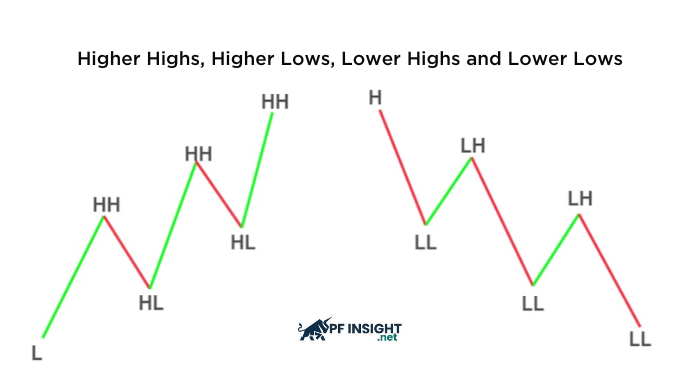
- The sequence of highs and lows formed by price: Market structure is defined by how price creates higher highs and higher lows, or lower highs and lower lows, which reflect the dominant direction of the market.
- The continuity or disruption of price movement: A healthy structure is usually maintained by clear expansion moves. When price begins to stall or fails to continue expanding in the current direction, this can signal that the structure is weakening.
- Price reactions at key levels: Traders focus on how price reacts when it reaches areas that previously acted as highs or lows, rather than only whether price breaks through those levels.
- Overall context rather than isolated signals: A price movement only has meaning when it is placed within the context of the existing structure. The same price behavior can carry different implications depending on whether the market is trending or consolidating.
Using price action to identify trends, breakouts, and transitions
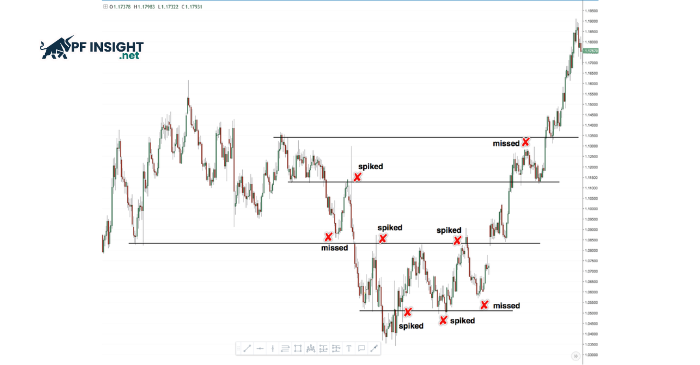
When price consistently expands in one direction
Traders do not define a trend simply because price is moving up or down. A trend only truly exists when each new price swing continues to expand in the same direction, and the pullbacks do not alter the overall structure. When price consistently produces sequential movements that build on one another, the market is showing clear control by one side, and this is how a trend is identified through price action.
When a breakout reflects structure, not a single level
In price action trading, a breakout is not viewed as the moment price crosses a single line. Instead, traders see a breakout as the result of the entire structure that came before it. If price can hold and continue after the initial reaction, the breakout reflects a genuine structural expansion. Conversely, when price quickly returns to the prior range, it often indicates that the structure is not yet ready to change.
When structure starts to lose consistency
Transitions rarely occur through clean, obvious moves. Traders usually recognize a transition phase when price action becomes inconsistent. Expansion moves weaken, highs and lows are no longer maintained, or countermoves appear more frequently. These changes do not confirm what will happen next, but they indicate that the current structure is gradually losing its validity.
By observing how price expands, sustains, or fails at different stages, traders can distinguish between a continuing trend, a breakout with structural support, and phases where the market is transitioning, without relying on indicators or mechanical signals.
How traders apply price action trading without indicators
When indicators are removed, traders are not simply trading with fewer tools. They are forced to change the way they read the market, and this process usually revolves around the following observations:
Context always comes before any price movement
Before focusing on an upward or downward move, traders need to understand the existing overall structure. A price movement only becomes meaningful when it aligns with or contradicts that structure.
Not every strong move is important
A large price push may look impressive, but if it is not followed through or is quickly negated, its informational value is very low. In contrast, smaller moves that are sustained consistently often reflect clearer market control.
Traders observe reactions, not hunt price levels
What matters is not whether price reaches a specific area, but how it reacts when approaching that area. Hesitation, rejection, or continuation often reveal far more than the price level itself.
Uncertainty is not something to eliminate
Without indicators, traders accept that they will not always have clear answers. Rather than seeking absolute confirmation, they focus on maintaining an interpretation that is consistent and aligned with the current context.
The ultimate goal is not to predict correctly
Using indicator-free price action trading is not about answering where the market will go next. It helps traders understand the state the market is currently in, allowing them to avoid acting against the existing structure and price behavior.
Subjectivity and limitations when reading market structure
Reading market structure through price action does not offer a single correct interpretation. On the same chart, two traders may arrive at different conclusions, and that does not mean one is right and the other is wrong.
Market structure is inherently subjective
How a trader defines highs, lows and which swings are significant enough to form structure depends on the timeframe, experience, and context they are observing. These differences are a natural part of price action, not a flaw in the approach.
The same price behavior can carry different meanings
A breakout may be interpreted as a continuation within a trending context but viewed as noise when it occurs during consolidation. Market structure does not exist in isolation and must always be evaluated within the broader market context.
Price is not obligated to react as structure suggests
No matter how clearly the structure is read, the market can still move in ways that contradict expectations. Price action reflects probabilities, not guarantees, and every interpretation has its limits.
The absence of indicators means fewer layers of confirmation
When relying solely on price, traders do not have additional tools to confirm their readings. This requires greater discipline in maintaining a consistent interpretation, rather than constantly adjusting structure to fit new price movements.
The greatest limitation lies in trader expectations
Cấu trúc thị trường trở nên kém hiệu quả hơn khi các nhà giao dịch cố gắng ép buộc nó dự đoán tương lai. Khi hành động giá được sử dụng để hiểu bối cảnh hiện tại thay vì tìm kiếm sự chắc chắn, những hạn chế này trở nên dễ quản lý hơn nhiều.
Việc nhận thức được tính chủ quan và những hạn chế của cấu trúc thị trường không làm suy yếu giao dịch dựa trên hành động giá. Ngược lại, nó giúp các nhà giao dịch tiếp cận thị trường với tư duy thực tế hơn, giảm bớt những kỳ vọng không cần thiết và tập trung vào việc diễn giải hành vi giá một cách nhất quán theo thời gian.
Phần kết luận
Giao dịch dựa trên hành động giá không phải là tìm kiếm các mô hình hoặc tín hiệu cố định, mà là cách các nhà giao dịch đọc và diễn giải cấu trúc thị trường thông qua hành vi giá. Bằng cách tập trung vào bối cảnh, tính nhất quán về cấu trúc và phản ứng của giá thay vì các chỉ báo, các nhà giao dịch chấp nhận tính chủ quan và những hạn chế như một phần tự nhiên của quá trình phân tích, cho phép họ duy trì cái nhìn thực tế và nhất quán hơn về thị trường theo thời gian.
Hãy đọc thêm các bài viết về giao dịch trong mục Trung tâm Kiến thức của chúng tôi .