

Position trading is a long-term investment method, based on fundamental analysis and market trends to determine entry and exit points. Compared to short-term trading, this method is less subject to daily fluctuations, helping investors take advantage of major trends and optimize profits. In this article, join PF Insight to explore the strategies, advantages and disadvantages of position trading.
- Scalping trading strategies best indicators and timeframes for short trades
- Trend confirmation indicator MT4 features you must know before applying
- 5 Must-know quantitative trading strategies for consistent profits
What is position trading?
Position trading is a strategy of holding assets for a long period of time, usually several months to several years, based on trend and fundamental analysis. This method allows investors to take advantage of large fluctuations and reduce the frequency of short-term transactions.
Position traders focus on long-term trends, ignoring short-term price fluctuations. This method helps them identify large profit targets from the market. Unlike traditional investments, position trading allows flexibility in entering and exiting orders based on fundamental analysis.
Among trading strategies, position trading uses the longest timeframe. Advantages include maintaining a position with little change, taking advantage of larger trends, and reducing the impact of short-term fluctuations, allowing the trader to focus on long-term profit goals.
Identifying features of position traders

Below is a summary of the basic features of position trading, helping investors optimize long-term strategies.
- Position trading is only suitable for professional investors.
- Investors hold positions for long periods of time to take advantage of major market trends.
- Position trading traders mainly analyze fundamental data to assess the real value of assets (financial indicators, business results, economic growth prospects).
- Position traders execute much fewer orders than day traders or swing traders, because they maintain positions for the long term and do not buy and sell frequently in the short term.
- In position trading, setting a stop-loss order is essential to control risk. However, since holding a position for a long time, investors often set a wider stop-loss level to avoid being exited early due to short-term fluctuations.
- Position trading requires investors to be patient and stay calm, not letting short-term price fluctuations affect their long-term strategy.
- Investors typically focus on identifying and following a long-term trend, maintaining their position until the trend reverses.
- Due to limited trading volume, they also reduce associated costs such as commissions or spreads, thereby optimizing profits.
- Position trading strategies apply to many types of markets such as stocks, Forex, commodities or real estate.
- Long-term traders focus mainly on the big picture of the market and fundamentals, rather than keeping up with daily news updates.
Compare position trading with day trading and swing trading
Comparing position trading with day trading and swing trading shows clear differences in time frames, risk levels and trading frequency, helping investors choose the strategy that suits their style and financial goals.
| Position trading | Day trading | Swing trading | |
| Time frame | Long-term | Short-term |
Medium-term |
|
Holding period |
Months to years | Within a day |
Days to weeks |
Position trading differs from day trading primarily in terms of market approach and holding time. While day traders prioritize speed, attempting to open and close positions within the same trading session, position traders take a longer-term view, holding positions for weeks or months. The difference in trading timeframes has important financial consequences, particularly in capital allocation.
Swing trading and position trading differ significantly in terms of holding timeframes. Swing trading is a medium-term strategy, typically holding positions for several days to several weeks, aiming to exploit short-term price movements. Position trading, on the other hand, focuses on longer-term trends, often starting from the end of a swing. As such, the two methods lead to different profit targets and require traders to use separate analytical techniques to make effective trading decisions.
Advantages and disadvantages position trading strategy
Each trading strategy has its own strengths and limitations. For Position Trading, investors need to clearly understand the advantages and disadvantages to apply effectively.
Advantage
- This strategy helps investors reduce the time spent on constantly monitoring charts and analyzing daily price movements.
- Traders do not have to worry about short-term fluctuations, and psychological pressure is also significantly reduced compared to fast trading methods.
- Position trading brings greater profits than short-term trading methods.
- Thanks to less order execution, investors save on commissions and spreads.
Disadvantages
- Position trading requires investors to possess extensive knowledge and solid market experience.
- Suitable for traders with abundant investment capital to maintain long-term positions
- There is a risk of unstable annual returns due to low trading frequency.
- Traders may not achieve the expected profit, even break even or suffer a loss if they decide to close the position before the trend ends.
- Investors can suffer large losses if the market moves against their predictions.
- Position trading strategies often incur significant overnight fees. If traders ignore these costs, their account balances can rapidly decline over time.
Top 3 most effective position trading methods
Trend trading strategy
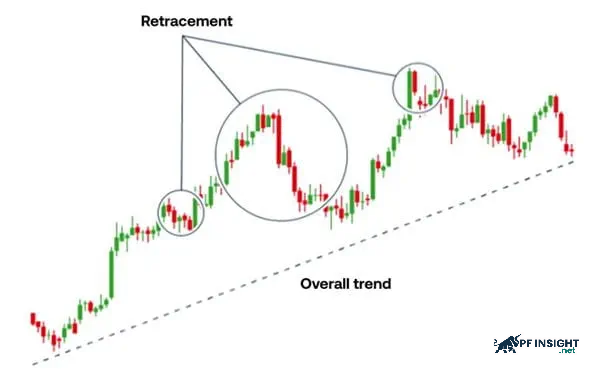
Position traders are by nature trend followers. They operate on the assumption that an established trend has the momentum to continue unless there is a strong signal of a reversal in market sentiment. Therefore, it is safe to say that almost any position trading strategy is a strategy designed to take full advantage of long-term trends.
In trend trading, the goal is to open a position as early as possible when a new trend is forming and close it when a predetermined profit level is reached. Although this strategy is often based on fundamental analysis, technical indicators still play an important role. They help traders identify the start and end of a particular trend through the analysis of momentum, volume, and price action.
The two most widely used technical analysis tools in trend trading are Moving Averages (MA) and Relative Strength Index (RSI). These indicators help traders identify and track the development of market trends effectively.
Breakout trading strategy
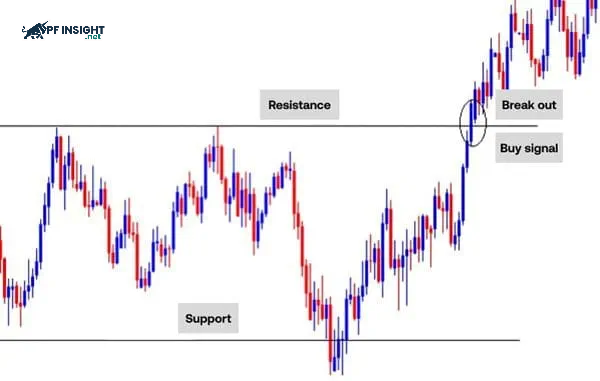
Another popular strategy in position trading is breakout trading. This method requires traders to identify important support or resistance areas in the market. They then carefully assess whether the current trend has enough momentum to push the price above those resistance levels, thereby confirming a new trend and opening a position.
When a support or resistance level is broken, the price trend is expected to continue to increase or decrease in that direction for a long period of time before a reversal signal is given. Therefore, if position traders are able to accurately identify these breakout points, they can open positions on a strong price move to take full advantage of the new trend.
Commonly used tools and indicators in Forex position trading strategy are a group of trend lines or indicators that measure momentum and volume. Typical examples of these tools include Fibonacci retracement lines, Ichimoku clouds, and the MACD (Moving Average Convergence Divergence) indicator.
Breakout traders often use stop-entry orders to manage risk and automate their entry. Let’s say Company XYZ has a resistance zone at $50. When the price breaks above $51, the trader will set up a buy order to enter the market as soon as the price breaks above this important level. This approach allows them to get in on the uptrend as soon as the market momentum starts to build.
Pullback position trading strategy
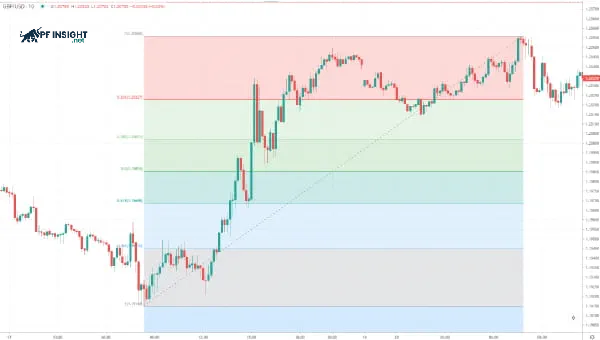
A retracement is a term used to describe small-scale price movements that go against the main trend. This is when prices temporarily correct against the direction of the broader trend before resuming their original course.
A retracement is understood as a period adjustment time necessary before the trend officially continues. Position traders with existing orders often ignore these short-term price fluctuationsHowever, for those waiting for an opportunity, the pullback is key entry points. It allows them to enter the market in the main trend at a good price, minimizing the risk compared to buying or selling at the top or bottom.
The most popular method of identifying retracements and distinguishing them from outright trend reversals is through the application of Fibonacci retracement lines. This tool provides important price levels to gauge the depth of the correction.
The example above shows the EUR/GBP currency pair in a clear downtrend. As the price started to rally, it hit a Fibonacci level and immediately resumed its downward momentum. This confirms that the price increase was just a temporary retracement and not a true reversal. If the market could break through and surpass that Fibonacci level, it would be a strong signal of a larger price movement, potentially leading to a reversal.
Things to know before applying position trading

Position trading is an attractive long-term investment strategy, but it can often be difficult for new, inexperienced traders. From the lessons of investors who have successfully used position trading, here are some suggestions to help you improve your skills and optimize your results.
- Develop a trading strategy: A successful trading plan is a tool that protects you from making decisions based on emotions, by setting clear rules and goals on when and how to trade. This plan should be carefully constructed, including determining the frequency of trades over a certain period of time, specific criteria for opening and closing positions, and the amount of time committed to closely monitoring all market developments.
- Consider market sentiment: When you position trade, you are orienting your investments by assessing the long-term outlook of the market, a process that is largely based on fundamental factors such as corporate earnings, macroeconomic indicators, and market news. It is extremely important to stay updated with the latest analysis so that you can grasp the big picture and have a deep understanding of the trading instrument you have chosen.
- Using technical analysis: Technical analysis is defined as the use of indicators and historical price data to identify trends and price patterns. Even though position trading is a long-term investment style, it still requires traders to master technical indicators and understand price action to be able to determine the most accurate entry and exit points for each position.
- Risk management: Regardless of the strategy you are pursuing, whether it is long-term position trading, day trading, swing trading, or scalp trading, managing your risk of loss is a key element that cannot be overlooked. The most effective method is to set stop-loss and limit orders, which automatically close the position at a predetermined price.
Conclude
Position trading offers the opportunity to maximize profits for those who are patient and understand how the market works. Although it requires deep knowledge and a long holding period, this strategy is still an ideal choice for investors who want to build a sustainable portfolio. By combining technical and fundamental analysis, traders can improve their trading efficiency with position trading.