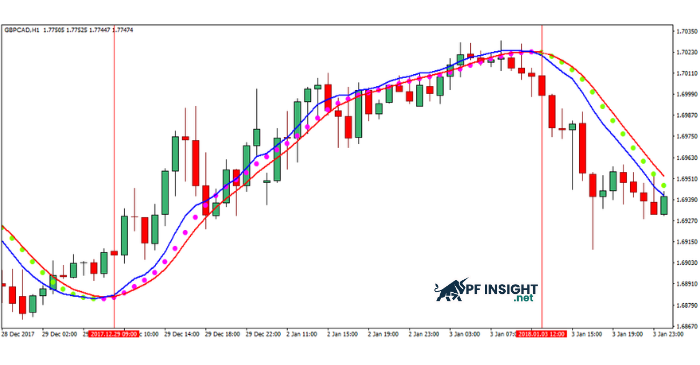

The momentum trading strategy focuses on capturing price movements that show strong continuation in a specific direction. In modern financial markets, momentum has become even more powerful due to increased volatility, algorithmic trading, and rapid news flow. Rather than predicting reversals, momentum traders align themselves with existing market strength and ride trends for short- to medium-term gains. This strategy is widely used across stocks, forex, crypto, and futures markets by both retail and institutional traders. In this guide, we will break down how momentum trading works, how to apply it effectively, and the key advantages and risks every trader should understand.
- Risks and mistakes in counter trend trading strategies
- Trend continuation strategy explained: how it works in strong trends
- Range trading strategy with clear entry and exit rules
What is a momentum trading strategy?
A momentum trading strategy is a trading approach based on the assumption that prices that are rising tend to continue rising, while prices that are falling tend to continue falling for a certain period of time. Instead of attempting to predict market tops or bottoms, momentum traders focus on following the current strength of the market.
This strategy places little emphasis on whether an asset is “cheap or expensive” based on intrinsic value. What momentum traders care about is the speed of price movement, the level of capital participation, and how the market reacts to new information. In modern markets, where news and orders are processed almost instantly, momentum trading has become one of the most effective approaches for capturing short and medium term price movements.
Core concept behind momentum-based price movements
The core of momentum trading lies in the concept of price inertia. When an asset begins to move strongly in one direction, the initial buying or selling pressure often attracts additional groups of traders, creating a chain reaction.
This process typically unfolds in three stages:
- First is the initiation phase, when a small group of traders or institutions begin entering positions based on information, reports, or shifts in expectations.
- Next is the acceleration phase, when the crowd joins in due to fear of missing out (FOMO), causing price to move rapidly and form a clear trend.
- Finally is the saturation phase, when buying or selling pressure weakens and momentum starts to slow.
Momentum traders aim to participate during the early or middle stages of this cycle, where the reward-to-risk profile is most favorable, and avoid entering when the market has already become overcrowded.
Why momentum persists in modern markets
Momentum persists in modern markets because trading structure has changed significantly compared to the past. Several key factors sustain momentum strength:
- Algorithmic and high-frequency trading: Millions of orders are triggered based on breakouts, volatility, and volume spikes, causing trends to expand more rapidly.
- Instant news dissemination: Within seconds, economic data, earnings reports, and macroeconomic developments can generate waves of trading activity across global markets.
- Stronger FOMO-driven participation: Retail traders are entering markets in greater numbers, particularly in crypto and equities.
- Institutional capital trading with the trend: Large funds tend to increase exposure once trends are confirmed rather than when prices appear cheap.
This combination not only drives trend formation but also extends trend duration, creating ideal conditions for momentum trading strategies.
Momentum vs market efficiency theory
According to the Efficient Market Hypothesis (EMH), asset prices already fully reflect all available information, meaning it is not possible to consistently generate excess returns simply by analyzing price data.
Momentum trading challenges this hypothesis to a certain extent. In reality, prices do not always react instantly or perfectly to new information. Instead, markets often respond slowly, overreact, or move emotionally, creating short and medium term trends.
Momentum traders do not attempt to prove whether the market is right or wrong. Rather, they capitalize on inefficiencies in market behavior and reaction speed. With proper risk management, momentum strategies can remain effective even in markets considered to be “relatively efficient.”
How momentum trading works step by step
Momentum trading operates by identifying assets that are exhibiting strong trends, confirming that momentum remains intact, and executing entries and exits at high probability levels. Rather than trading every minor fluctuation, momentum traders focus on periods of clear price expansion accompanied by strong capital participation.
This process is typically divided into three core steps: identifying strong trends, confirming momentum strength, and executing trades with discipline.
Identifying strong trending assets
Momentum traders consistently seek markets that are “exploding with strength.” Not slow, gradual movement, but fast, decisive, and directional price action.
- Price expansion: Long candles with minimal wicks, where price moves aggressively without hesitation
- Volume confirmation: Increasing volume as more participants enter the market
- Volatility breakout: Price breaking out of consolidation zones and accelerating immediately afterward
When price moves slowly, erratically, or with weak volume, it is typically not an ideal environment for momentum trading.
Confirming momentum strength
After identifying a strong trend, traders must confirm that momentum has not weakened. This helps avoid entering trades when the trend is already near exhaustion.
- Trend structure: Strong trends typically form higher highs and higher lows in an uptrend or lower highs and lower lows in a downtrend.
- Continuation patterns: Short consolidation structures such as flags, pennants, or shallow pullbacks suggest the market is pausing to continue the trend rather than reversing.
- Indicator alignment: Momentum indicators usually remain in trend-supportive zones, signaling that buying or selling pressure is still dominant.
Executing entries and exits
Trade execution in momentum trading focuses on entering as the trend accelerates and exiting when momentum begins to weaken.
- Breakout entries: Enter trades when the price breaks above or below key levels with strong volume expansion.
- Pullback continuation entries: Buy or sell during minor retracements within the main trend to optimize the reward-to-risk ratio.
- Momentum exhaustion exists: Exit positions when signs of overbought or oversold conditions appear, or when price loses its trend structure.
Key principles every momentum trader must follow
Momentum trading is not simply about chasing strong price moves. It is a disciplined trading system built on probability and risk management. Traders who succeed with momentum strategies typically follow a strict set of core principles designed to maximize gains while limiting losses when market conditions shift.
The four principles below form the foundation of most effective momentum trading systems in modern markets.
Trade liquid and volatile markets only
Liquidity and volatility are two indispensable elements of momentum trading. High liquidity markets allow traders to enter and exit positions efficiently with minimal slippage, while strong volatility creates price ranges large enough to compensate for risk.
Assets with substantial trading volume typically reflect participation from diverse investor groups and institutions, which helps sustain momentum more consistently. In contrast, low liquidity markets are more susceptible to noisy price action and sudden reversals.
Enter early, not after crowd saturation
The greatest advantage of momentum trading lies in entering early within the trend formation cycle. When too many traders have already participated, momentum often begins to weaken as new buying or selling pressure diminishes.
Entering too late not only reduces the reward-to-risk ratio but also increases the likelihood of getting trapped when the market reverses. Effective momentum traders consistently look for signs of trend initiation or the early acceleration phase.
Control risk before chasing profit
Because of its high volatility characteristics, momentum trading can generate substantial profits but also lead to rapid losses. For this reason, risk management must be established before focusing on returns. Defining appropriate stop-loss levels, maintaining proper reward-to-risk ratios, and sizing positions correctly enable traders to remain sustainable even when some trades fail.
Let winners run, cut losers fast
A key characteristic of momentum trading is that profits often come from a small number of large winning trades. As a result, holding profitable positions while cutting losing trades quickly is critical to long-term performance. Exiting too early while the trend remains strong can significantly reduce the overall profitability of a momentum trading system.
Best technical tools for momentum trading
In momentum trading, technical tools are not used to predict the market but to confirm trend strength and identify optimal entry timing. Professional traders often combine momentum indicators with price action to filter noise and improve trade probability. Rather than relying on numerous indicators, effective momentum traders focus on a small set of core tools that directly reflect the speed and strength of price movement.