
When the Forex market becomes unpredictable, relying on a single trading direction can expose traders to significant risks. The hedging Forex strategy offers a more flexible approach, allowing traders to protect their capital against unexpected reversals. Although it is not a strategy suited for every trading style, hedging still plays an important role in risk management and maintaining long-term trading performance.
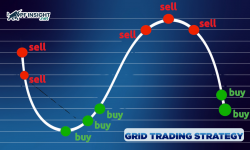
- How the grid trading strategy attempts to profit from sideways price movement
- Why trend following strategy remains a consistent trading approach
- Breakout trading strategy for forex markets explained
What is a hedging Forex strategy?
A hedging Forex strategy is a trading method in which traders open additional opposing positions to offset the risk arising from the main position. Instead of closing orders when the market moves unfavorably, this strategy helps reduce the impact of exchange rate fluctuations, thereby protecting the account and maintaining stability for the trading portfolio.
Essentially, a hedging Forex strategy involves holding positions in two instruments that are inversely correlated. When the value of one instrument declines, the other tends to rise, thus balancing risk and limiting losses. However, applying this method requires traders to have a thorough understanding of market correlations and should avoid making hasty decisions.
Who should use a Forex hedging strategy?

Individual traders who understand the market and can anticipate economic trends are often the first to adopt a hedging Forex strategy. However, in the context of unpredictable market volatility, hedging has become increasingly popular among a broader range of participants. Institutional investors and professional traders often use hedging as a core risk management tool, especially when they need to protect large investments against sudden currency fluctuations.
Hedging is considered an important risk management tool, helping investors protect their portfolios against unpredictable market fluctuations. When trading in a volatile environment, traders may face risks from interest rates, exchange rates, as well as political and economic factors. In addition, geopolitical changes or commodity supply fluctuations can also significantly impact prices.
These factors need to be carefully evaluated by traders during the fundamental analysis process before placing an order. Early preparation allows traders to build appropriate risk mitigation strategies, thereby proactively responding to market fluctuations and limiting unwanted losses.
When is the right time to use a hedging strategy?
Hedging Forex strategies are considered strategic decisions, therefore traders should only apply them in appropriate market conditions to minimize risk.

Short-term investment
Day traders can leverage a hedging Forex strategy to reduce risk during periods of rapid market fluctuations. These movements often occur when currency pairs are in overbought or oversold conditions, increasing the likelihood of short-term price corrections or reversals.
In cases where traders open a buy position when the market is overbought, hedging allows them to open additional sell orders to limit risk when prices reverse. Conversely, if holding a sell position in an oversold condition, traders can open buy orders to balance their portfolio and protect profits against unexpected market fluctuations.
Long-term investment
For long-term strategy investors, the hedging Forex strategy plays a crucial role in protecting capital against adverse economic and market fluctuations. Instead of closing their main positions, they can use opposing buy or sell orders to minimize the impact of sharp price declines. When the goal is long-term hedging, investors often hold hedge positions for several years to balance overall risk.
During this phase, short-term price fluctuations will not affect your trading decisions. Profits are only recognized when the hedging position is maintained for the expected duration, usually after the completion of the established long-term investment cycle.
Hold the order overnight
Holding orders overnight or over the weekend carries risks from price gaps and after-hours volatility, which can trigger stop-loss orders or result in unexpected losses.
In the context of unpredictable market fluctuations, a hedging Forex strategy becomes a solution to help traders minimize unforeseen risks. By using opposing orders, traders can protect their current positions against short-term swings or price gaps. This approach not only helps manage profit and loss levels but also provides stability and peace of mind when the market enters periods of low trading activity.
Besides hedging, closing all positions before the end of the week is also a simple and easy solution. This approach is particularly suitable for traders who want to avoid market volatility and take a break. The choice between hedging or completely exiting a trade will depend on each trader’s capital management skills, experience, and patience level.
The most effective hedging Forex strategies today
Depending on market conditions and the type of traded asset, traders can choose a suitable hedging Forex strategy to manage risk and optimize their investment objectives.

Correlation hedging strategy
A correlation-based Forex hedging strategy focuses on using currency pairs with similar movements. By opening opposing buy and sell orders related to the same currency, traders can balance risk and stabilize their trading portfolio.
In cases where USD/GBP and EUR/GBP tend to move similarly, traders can use a hedging strategy by buying USD/GBP and short-selling EUR/GBP. This way, if one currency pair experiences unfavorable fluctuations, the profit from the other pair can offset losses, limiting risk and maintaining portfolio balance.
Direct hedging
In trading, a direct or perfect hedging Forex strategy is implemented by opening a position opposite to the currency pair being held. This approach helps lock in risk, protecting the entire position against unexpected market fluctuations.
For example, when a trader is holding a long position in USD/GBP, they can open an additional sell order on the same currency pair with an equivalent volume. This completely balances the risk, resulting in virtually zero net profit or loss. In some cases, with good hedging management, traders can still take advantage of market movements to generate additional profits from the supplementary position.
Cross-currency swap hedging strategy
Currency swaps are an effective risk hedging strategy against interest rate fluctuations, especially during periods of economic instability. This strategy is primarily used by large financial institutions to stabilize capital costs and avoid losses when the market declines. Accordingly, the participating parties agree on an interest rate at the outset of the contract and exchange the principal and accrued interest in the agreed-upon currencies.
Hedging options strategy
Options are commonly used instruments in a hedging Forex strategy, allowing traders the right to buy or sell a currency pair at a predetermined price without the obligation to execute. Each contract has a specific expiration date, and before it expires, traders can choose to exercise the option or let the contract expire automatically.
In the short term, traders can use Forex options as an effective tool to hedge against exchange rate risk and limit the impact of market volatility.
Suppose a trader intends to trade USD/GBP and chooses a call option, hoping to capitalize on future price fluctuations. To mitigate risk if the exchange rate falls, they can open additional put options with a corresponding volume. When the price falls, the profit from the put option can offset the risk of the remaining position, thereby protecting the account from potential losses due to exchange rate volatility.
Foreign exchange forward contract
A foreign exchange forward contract is an agreement in which a trader and a broker agree to buy or sell a currency pair at a predetermined price at a future date. This forward price is determined by the current spot exchange rate, combined with the risk-free interest rates of the two currencies involved.
Forward contracts play an important role in a hedging Forex strategy by allowing traders to lock in exchange rates for future transactions. This approach helps reduce the impact of price fluctuations and provides greater control in managing foreign exchange risk.
For example, a US exporter selling goods to the Indian market might face exchange rate risk when paying in INR. By using a forward foreign exchange contract, this business can lock in the current USD/INR exchange rate. This helps eliminate the negative impact of unexpected future exchange rate fluctuations.
Hedging Forex with CFDs
CFDs play an important role in a hedging Forex strategy by allowing traders to participate in the market without owning the underlying asset. Instead, traders only trade based on the price difference between the opening and closing of a position.
Thanks to its flexibility, CFDs have become one of the most widely used Forex hedging tools. The ease of opening two-way positions allows traders to both manage risk for currency pairs and exploit profit opportunities in both upward and downward market phases.
Imperfect hedging strategy
In Forex trading, imperfect hedging strategies are used to mitigate risk for a portion of a position held. Instead of eliminating risk entirely, traders only partially hedge by combining tools such as call and put options.
When holding a long position, adding a put option helps limit losses if the market reverses downward. If in a short position, opening a call option can act as a hedging tool. This helps traders control risk when market prices unexpectedly rise.
Advantages and disadvantages of hedging Forex strategy
The hedging Forex strategy offers many benefits in risk management; however, it also has certain limitations that need to be carefully considered.

Advantages of hedging Forex
- Diversifying your portfolio: Many asset classes, such as stocks, commodities, or currencies, can be used for hedging. By applying the right concepts and techniques to each asset class, traders can effectively protect their capital in various market conditions.
- Proactive risk management: Investing always involves risk, however, traders can proactively control and minimize risk through appropriate measures instead of passively accepting losses.
- Controlling losses: Losses are unavoidable in investing, but applying risk mitigation tools helps traders limit losses within acceptable limits, thereby protecting capital and maintaining a more stable trading mindset.
- Stabilizing price volatility: Although asset prices are constantly changing according to market conditions, traders can still fix or reduce price fluctuations in certain situations through instruments such as futures contracts, call options, and put options.
Disadvantages of hedging Forex
- Costs involved: The hedging Forex strategy always involves certain costs. These can be direct costs, such as option premiums or transaction fees, or indirect costs resulting from reduced profits when the market moves in a favorable direction.
- Limiting profit potential: Risk hedging means accepting a trade-off in profit. Traders need to consider the level of risk they can tolerate, because in many cases, preserving capital and minimizing losses is more important than maximizing profits.
- High level of complexity: Even for experienced investors, implementing risk-hedging strategies is not simple. The hedging Forex strategy requires in-depth market analysis, assessment of macroeconomic factors, and sometimes even geopolitical risks, which can be overwhelming for beginners.
- Misconceptions and biases: Mistakes in thinking and personal biases can reduce the ability to make objective assessments. Especially during periods of high market volatility, emotions can lead to excessive hedging or choosing the wrong hedging Forex strategy.
How to implement an effective hedging Forex strategy
The hedging Forex strategy is not simply about opening opposite positions. It requires careful analysis, calculation, and strict capital management. A properly constructed hedging strategy can help minimize unwanted losses.

Step 1: Identify potential risks in your trading position
Before implementing a hedging Forex strategy, traders need to assess the risks of their trades and consider the market-impacting factors.
- Market conditions: Consider upcoming economic events, such as interest rate decisions or key economic reports, which can cause significant market volatility and impact your position.
- Trading direction: Assess the risk of price fluctuations in the direction of your current holding, for example, a price decrease when buying or a price increase when short selling, to determine the level of hedging required.
- Leverage and account size: Check your margin capacity before implementing hedging, ensuring you have sufficient capital to support hedging positions without increasing the risk of liquidation.
- Correlation between currency pairs: Consider that you are trading multiple different currency pairs and assess how they influence each other to develop an effective hedging strategy.
Step 2: Select the most effective risk hedging method
After assessing the risks, traders need to choose a suitable hedging method: direct, correlation-based, options, or futures contracts. Each strategy has its own advantages, so choose the one that best suits your goals and trading style.
Step 3: Track your positions and adjust as needed
Risk hedging is not fixed. Closely monitor positions, adjust trade sizes, and exit trades when necessary to ensure the hedging Forex strategy remains effective under all market conditions.
- Monitor market trends: Continuously monitor your underlying position and hedging positions. Pay attention to factors such as economic data, geopolitical events, or central bank announcements, as these can significantly impact currency correlations and price movements.
- Adjust your hedging strategy: When you notice a weakening or reversal in the correlation between your hedging positions, consider adjusting your strategy to continue effectively protecting your positions.
- Take profit or minimize losses: Sometimes it’s necessary to close a hedging order early to protect profits or limit losses. If the main position is profitable and market prospects are favorable, you can cancel the hedging order to maximize profits from the main trade.
Step 4: Diversify your hedging tools and methods
Diversifying instruments is an important step to improve a hedging Forex strategy. By applying multiple hedging methods and managing different currency pairs or asset types, you can better protect your positions against unexpected market fluctuations.
Common mistakes when applying a hedging Forex strategy
The primary goal of a hedging Forex strategy is to protect traders from losses. However, if applied incorrectly or without proper market monitoring, the strategy can backfire and cause losses instead of reducing risk. Below are common mistakes that traders need to avoid:
- Excessive risk hedging: When traders over-hedging, profits and losses from opposing positions can cancel each other out, resulting in minimal returns. It’s crucial to find a reasonable balance between risk protection and profitability, avoiding undermining the strategy’s effectiveness.
- Poor correlation analysis: Choosing currency pairs without understanding their correlation can render hedging ineffective. If currency pairs don’t move in opposite directions, hedging won’t protect the position. Using correlation calculators helps select pairs with the best potential for hedging.
- Ignoring costs: If related costs are not taken into account, implementing a hedging Forex strategy can be more expensive than the actual risk you are trying to hedge.
- Holding a hedging position for too long: Hedging should be considered a temporary protection measure. Maintaining it for too long can reduce potential profits and incur unnecessary additional costs.
Conclude
The hedging Forex strategy is an important tool that helps traders manage risk in forex trading. However, to achieve optimal effectiveness, it is necessary to choose the right strategy and continuously monitor the market. To learn more about methods to optimize profits and minimize risks, you can visit pfinsight.net.