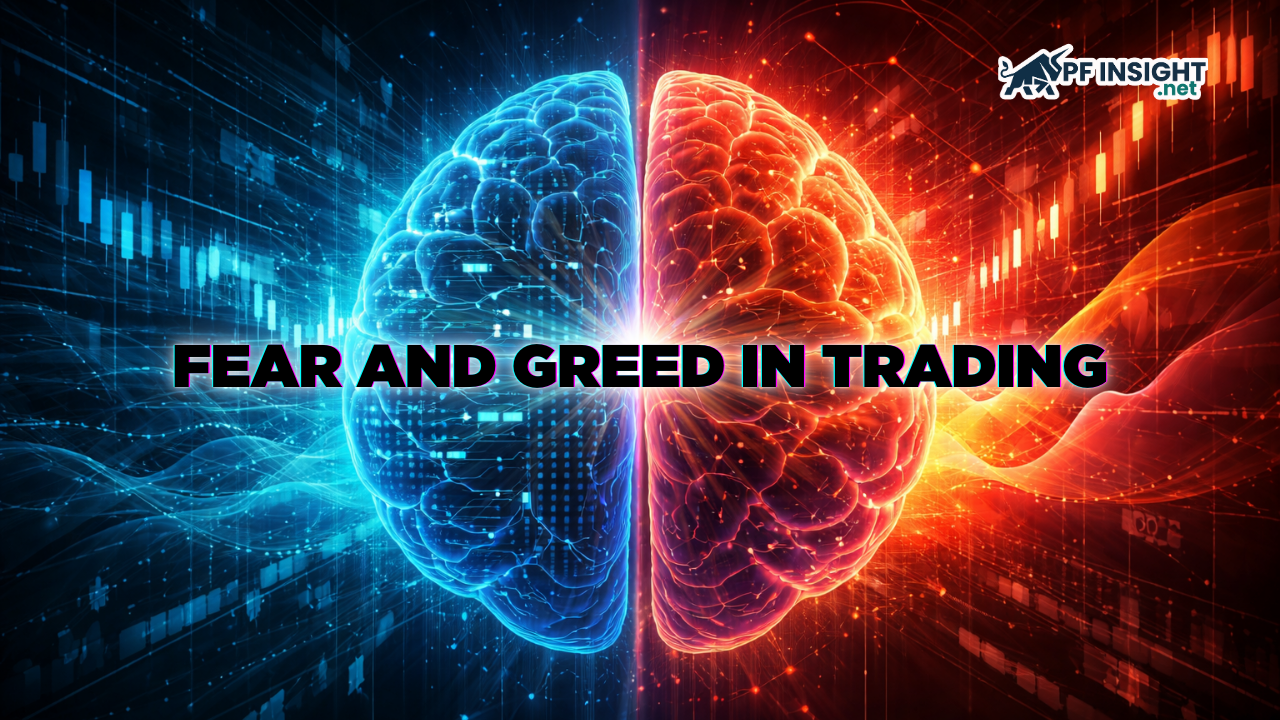
Fear and greed in trading are two emotional states that drive most trading decisions, often operating quietly without traders being fully aware of them. Many trading mistakes do not stem from poor strategies but from fear and greed distorting judgment, entry timing, and the perception of risk. By understanding how these emotions operate, traders can improve the quality of their decision-making, maintain discipline, and achieve greater consistency across different market conditions.
- Base and quote currency explained for traders learning forex basics
- Forex spreads explained and how they impact your trading costs
- Forex lot types explained and how to choose the right position size for your account
Why fear and greed dominate trading behavior
In the financial trading environment, fear and greed are not merely momentary emotions but psychological responses closely tied to risk and reward. When faced with price fluctuations, a trader’s brain tends to prioritize survival instincts over rational analysis, causing decisions to be driven by a sense of safety or profit expectations. Fear typically emerges when the market moves against expectations, pushing traders to act prematurely to avoid losses, while greed arises when the price moves favorably, leading them to extend trades beyond the original plan. The continuous repetition of these two states, combined with time pressure and information overload, makes fear and greed forces that influence trading behavior stronger than any technical factor.
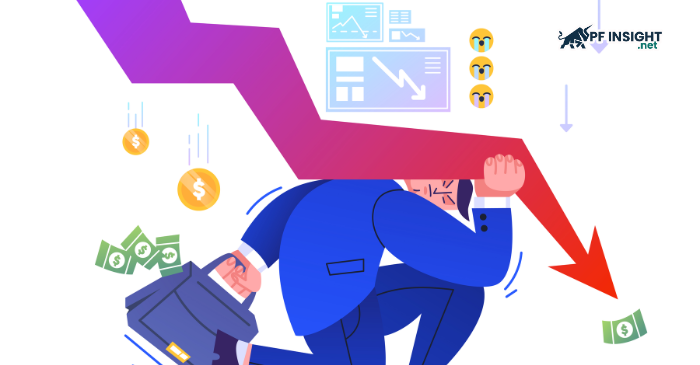
How fear and greed distort trading decision-making
Fear and greed do not distort decision-making by pushing traders into immediate impulsive actions. They do so in a more subtle way by changing the criteria traders use to evaluate a decision. Once emotions arise, the question quietly shifts from “Is this decision aligned with the plan?” to “Does this decision make me feel better?”
Fear usually intervenes at the moment when traders must accept uncertainty. A trade that is unfolding according to the plan but does not yet provide a sense of safety can trigger a desire for control. Exiting early, reducing position size, or staying on the sidelines is experienced as a “smart” decision, even though probabilistically it weakens the system’s edge. The sense of relief that follows reinforces the belief that the decision was correct, strengthening fearful behavior in future situations.
Greed distorts decision-making in the opposite direction, but through the same mechanism. When unrealized profits are registered by the brain as a form of ownership, traders become more sensitive to the possibility of losing those gains. Holding a trade for too long, ignoring exit points, or increasing risk is no longer seen as a breach of discipline but as an attempt to “optimize the opportunity.” In this case, decisions are not based on future probabilities but on the anticipated pain of regret.
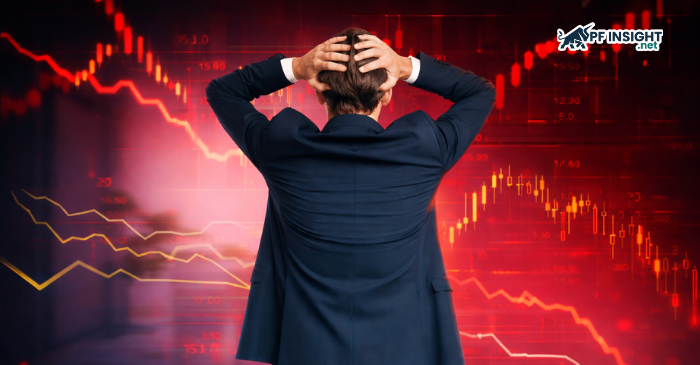
The common thread between fear and greed is that both lead traders to evaluate decision quality based on emotional relief or discomfort after acting, rather than on process consistency. When decision-making is measured by how right or wrong a trade feels, the trading system loses its guiding role, and behavior becomes the determining factor of long-term results.
How markets reflect collective fear and greed
At the market level, fear and greed no longer appear as individual emotions but become patterns of collective behavior. Markets do not respond to information in a perfectly rational way. They respond based on how the majority interprets risk and opportunity at the same moment. When many traders make decisions under the same emotional state, that behavior is amplified into trends, volatility, and imbalanced price movements.
Collective fear is often reflected through the following characteristics:
- Negative news is reacted to faster and more aggressively than the actual change in underlying fundamentals.
- Selling pressure spreads as traders prioritize exiting risk rather than reassessing the broader context.
- Volatility increases sharply as defensive decisions occur simultaneously.
- Capital flows into assets perceived as safe, not necessarily optimal.
Collective greed forms when confidence spreads across the crowd:
- Prices continue to rise even when valuation and risk are no longer aligned.
- Traders are willing to accept higher risk in order not to be left behind.
- Warning signals are downplayed or justified through new narratives.
- Profit-seeking behavior is reinforced by positive short-term outcomes.
The key point is that the market is not “wrong” when it reflects collective fear and greed. It is simply expressing how humans make decisions under uncertainty. When traders understand that price movement is often the result of collective behavior, they can distance themselves from crowd-driven reactions and evaluate the market with greater objectivity.
How understanding fear and greed improves decision-making
Understanding fear and greed does not make traders emotionally detached. Instead, it changes how they observe their own decision-making process. Rather than trying to suppress emotions, traders begin to recognize the moments when emotions intervene and question the motivation behind their actions. When decision-making is viewed as a behavioral process rather than a win or loss outcome, decision quality can genuinely improve.
This improvement often occurs through subtle shifts:
- Traders realize that the urge to act does not come from new signals but from feelings of discomfort or excitement.
- Fear is understood as a response to uncertainty, not as a signal that a trade must be exited.
- Greed is seen as emotional attachment to unrealized profits rather than a real edge.
- Decisions are evaluated based on adherence to process, not on post-trade feelings.
At the market level, understanding collective fear and greed helps traders adjust expectations rather than attempt to predict outcomes. Periods of euphoria or panic are no longer calls to action but contexts in which traders reassess their discipline. When emotions are placed in their proper role, decision-making is no longer driven by the need to react quickly, but anchored to a more stable and consistent behavioral system over the long term.
Conclusion
Fear and greed in trading are not issues that need to be eliminated but factors that must be properly understood so traders can improve the quality of their decision-making. By recognizing how these two emotions interfere with behavior, traders can evaluate decisions based on process rather than short-term emotional reactions. Observing fear and greed, both at the individual and market levels, helps traders maintain the necessary distance from psychologically driven market fluctuations. At Pfinsight.net, we focus on analyzing trading from a behavioral perspective to help traders build a more consistent and sustainable mindset. Understanding emotions does not guarantee success, but it is a foundation for long-term survival and growth in the market.