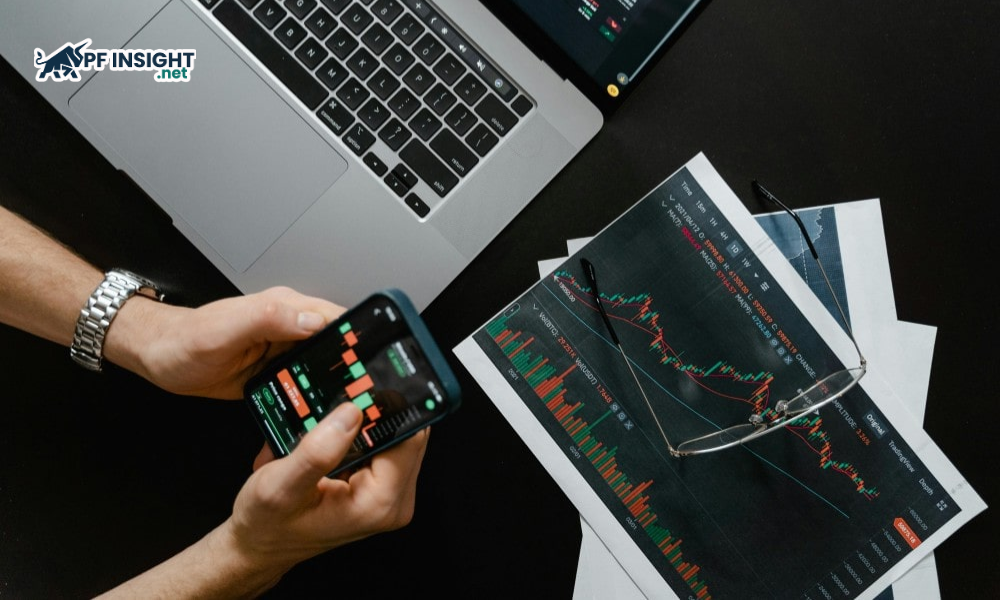

Backtesting trading strategies is a fundamental step that helps traders evaluate the effectiveness of a strategy before applying it to the real market. By testing the strategy against past price data, traders can understand how the strategy reacts to different market conditions. Backtesting doesn’t guarantee future profits, but it helps mitigate risk and build confidence based on data rather than emotion.
- Forward testing trading and why it matters after backtesting results
- Algorithmic trading basics for traders moving from manual to systematic trading
- FOMO trading meaning explained for beginners chasing fast price moves
What are backtesting trading strategies?
Backtesting trading strategies is the process of evaluating the effectiveness of a trading plan by applying it to past market data. Instead of relying on subjective predictions, traders use past results to assess the feasibility of a strategy. If the strategy has shown stability in the past, it can serve as a foundation for future decisions.
Through backtesting trading strategies, traders can evaluate the effectiveness of a strategy based on historical data without risking capital. This process helps determine profit potential as well as risk levels. If the results are positive, traders have a stronger basis for trading; otherwise, changes or improvements to the plan are necessary.
Backtesting is a method of applying trading strategies to past market data to estimate future performance. By analyzing past price data, traders can relatively predict future performance and make decisions based on reliable data. This approach is particularly suitable for beginners, helping them test ideas in a safe environment before trading with real money.
Two common backtesting methods
Reverse testing is an essential step in evaluating trading strategies. To understand how traders test performance using historical data, it’s necessary to explore two common reverse testing methods used in practice.
Algorithmic (automated) testing
Algorithmic (automated) testing offers high accuracy because all rules are executed programmatically, unaffected by emotions or personal opinions like manual trading. While the initial algorithm development process may be time-consuming, traders can quickly adjust parameters, optimize strategies, and run various backtesting scenarios. This saves effort in the long run and improves consistency.
Manual backtesting
Manual backtesting is a time-consuming and patient method, potentially requiring traders to spend dozens, even hundreds, of hours analyzing charts.
To use your time more effectively, you should clearly define your strategy from the outset. Then, select about 20 scenarios on the chart representing trading opportunities to assess the feasibility of the method. This initial exploration phase is crucial in identifying the core elements to include in the backtesting spreadsheet. Simultaneously, this process helps traders focus entirely on the strategy, thereby building confidence based on real-world experience.
When performing manual testing, you’re not just analyzing dry data, but also honing your ability to observe the market, identify visual signals, price patterns, and how they change under different trading conditions.
This practical method provides traders with insight into how the market fluctuates and reacts to different signals. When applied regularly, it helps strengthen discipline and confidence in the strategy. At the same time, this process supports the development of more effective trading opportunity identification skills when entering the real market.
Key factors in the backtesting process

The effectiveness of backtesting trading strategies depends on several important factors. Understanding these factors helps traders accurately assess strategy performance and avoid misleading results when analyzing historical market data.
The relationship between risk–reward and win rate
Balancing consistent profits with the opportunity for higher returns from long-term trends is crucial in trading. While large profits can be attractive, traders still need to evaluate them in conjunction with win and loss frequencies to understand the overall effectiveness of the strategy.
Backtesting trading strategies reveals that there is no perfect balance between the risk-reward ratio and the number of winning trades. When pursuing high profits, traders often face low win rates and many consecutive losing streaks. Conversely, strategies with high win rates often yield smaller profits.
Analyzing the frequency of wins during backtesting helps traders better prepare mentally and maintain stability in long-term trading.
Confirmation methods and usage frequency
When backtesting trading strategies, diversifying confirmation signals is a crucial step in understanding the strategy’s behavior across various market phases. Testing independent signals and signal combinations allows traders to compare reliability levels, thereby identifying the optimal approach to generate higher-quality and more consistent trading opportunities.
Times of high market volatility
After a trade is triggered, observing the market’s dynamics and volatility is essential. Some strategies require immediate reactions, while others demand patience for the price to move in the right direction. Understanding when the market typically experiences strong or weak volatility will help traders adjust their stop-loss and profit targets to better reflect reality.
Fixed profit-to-risk ratio versus discretionary targets
Backtesting trading strategies allow traders to compare the effectiveness of using a fixed risk/reward ratio versus setting arbitrary targets based on market developments. When price expectations reach key areas, flexible targets can yield better returns. Additionally, incorporating trailing stops during testing helps determine appropriate profit-taking strategies in strong trends.
Gradual position size adjustment
Traders should consider methods for adjusting position sizes in stages to better control risk. Planned increases or decreases in trading volume help protect capital and optimize profits when market conditions are favorable.
Guide to re-backtesting trading strategies

Backtesting trading strategies need to be implemented using a clear and structured process. Below are step-by-step instructions on how to set up and conduct effective backtesting:
Step 1: Establish your initial trading strategy
Before beginning backtesting trading strategies, traders need to develop a clear and specific trading strategy as the basis for the entire testing process.
- Entry conditions: Clearly define the signals or criteria used to open buy or sell positions, such as entering a buy order when the price breaks above the 50-day moving average.
- Exit conditions: Clearly define the factors that require you to close the trade, for example, exiting the trade when the RSI indicator enters the overbought zone.
- Stop-loss and profit targets: Set specific stop-loss and take-profit levels in advance to control risk and achieve expected profits.
- Risk management: Determine the maximum percentage of capital you are willing to risk on each trade to protect your account in the long term.
Step 2: Choose relevant historical market data
Backtesting trading strategies requires high-quality and comprehensive historical data. You should prepare OHLC data along with trading volume for each asset being analyzed. Choosing the right timeframe is also crucial, as each strategy will perform differently on intraday, daily, or weekly data. A good fit between data and strategy makes backtesting results more reliable.
For reliable backtesting, the dataset should span multiple market cycles. This allows the strategy to be tested in the context of market growth, decline, and sideways movement, rather than just a single condition.
Step 3: Execute the backtesting process
When backtesting trading strategies, traders can choose to test manually or use software to simulate trades. Backtesting software executes orders consistently based on established rules and automatically calculates performance. This makes evaluating key indicators clearer and more objective.
- Win rate: The percentage of profitable trades compared to the total number of trades executed.
- Risk/Reward: A comparison between the average profit from winning trades and the average loss from losing trades.
- Maximum drawdown: The largest
- reduction in capital from the peak to the bottom in backtesting trading strategies, reflecting the overall risk level of the strategy.
- Average profit per trade: The average profit or loss value that a trade generates throughout the testing period.
Step 4: Analyze strategy performance
Once you’ve completed the backtesting process, you need to carefully analyze the results to assess the strategy’s actual effectiveness. Don’t just look at the profits achieved; consider the risks as well. A strategy, even a highly profitable one, may be unsuitable if accompanied by significant declines or excessive volatility.
Step 5: Refine your trading strategy
If the backtesting results don’t meet expectations, adjust the strategy parameters and perform a reverse test. You can change entry/exit conditions, adjust stop-loss levels, or fine-tune risk management rules to improve trading performance.
Advantages and disadvantages of backtesting trading
Backtesting offers both advantages and disadvantages, helping to evaluate the effectiveness of a trading strategy before implementing it in practice. Below are the pros and cons of backtesting trading:
Advantage
- Increase trading efficiency: This process helps improve the likelihood of achieving profits by eliminating poorly performing strategies and validating those that yield better results.
- Understanding the market: By implementing backtesting trading strategies, you will gain a deeper understanding of how financial markets operate and react to different situations.
- Safe and fast: Backtesting allows you to evaluate strategies without incurring real risk, and it’s faster than testing on a demo account. By using historical data, you can analyze results immediately, which is especially useful for long-term strategies.
Disadvantages
- Results are not guaranteed: A profitable trading strategy in backtesting may not necessarily work effectively in the real market, as many factors such as liquidity, price volatility, and news can have an impact.
- Time-consuming when done manually: Manually testing strategies requires significant effort and time, and involves processing large volumes of data to ensure accuracy.
- Cost and required knowledge: Software that automates backtesting can be quite expensive or require users to have programming skills to operate effectively.
Common mistakes in backtesting trading strategies

Although backtesting is a useful tool, traders still need to avoid common mistakes to ensure accurate and reliable analysis results.
- Overfitting in strategy analysis: Overfitting occurs when a trading strategy is designed too perfectly based on historical data, leading to favorable results in backtesting but ineffective performance in the real market. The solution is to keep the strategy simple, limit complex filters, and test it across multiple datasets to ensure the strategy remains stable under various market conditions.
- Failure-ignoring error: Survivorship bias occurs when backtesting trading strategies only consider long-term performing stocks, excluding those that have failed. This inflates the strategy’s effectiveness. To avoid this, a complete dataset should be used to ensure the analysis accurately reflects market realities.
- Ignoring transaction costs: Transaction fees, including brokerage fees, slippage, and taxes, directly impact investment results. Failing to account for these costs can easily lead to overly optimistic profit predictions. Therefore, it’s essential to calculate these costs when backtesting trading strategies to gain a more realistic view of profits and losses.
- Future data bias: Prediction bias occurs when data not yet available in reality is used in backtesting analysis, leading to inflated strategy effectiveness. A typical example is relying on future prices to make decisions. Therefore, traders should only use actual data at the time of the trade to accurately reflect profit potential.
Tips for backtesting trading strategies
Here are some tips to help you backtest your trading strategies more accurately and effectively:
- Consider various market scenarios. If you only backtest trading strategies during an uptrend, you may see significantly reduced effectiveness when applying them in a downtrend or sideways market.
- Try to keep volatility as low as possible. High volatility can lead to significant losses, especially when using leverage, and increases the risk of being called for additional margin.
- Use the right dataset to test your strategy. For example, a strategy that works for manufacturing stocks may not work for technology stocks.
- Adjust the parameters during backtesting to suit your needs, resulting in more accurate test results. Parameters to consider include order size, margin requirements, and transaction costs.
- Avoid over-optimizing your strategy. The goal is to create a sustainable, profitable strategy with more winning trades than losing ones, rather than searching for an unrealistic “perfect” strategy.
- While backtesting trading strategies is useful, it doesn’t always accurately reflect the strategy’s likelihood of success. Markets are constantly changing, so past results don’t guarantee future performance.
Conclude
Backtesting trading strategies helps optimize strategies and minimize trading risks. According to PF Insight, it’s necessary to combine relevant data and consider market volatility to ensure results accurately reflect reality, thereby leading to smart and sustainable investment decisions.