
Prices don’t move randomly. Behind every sharp rise or fall lies a distribution and accumulation strategy by financial institutions. Institutional trading concepts focus on analyzing this behavior through market structure, liquidity, and supply-demand imbalances. By understanding the mindset of these institutions, traders can trade with large money flows instead of against them.
- How traders analyze price inefficiency in trading across financial markets
- Smart money entry models: a complete guide for institutional-style traders
- How to spot supply demand imbalance on trading charts for high-probability trades
What is institutional trading?
Institutional trading describes the trading behavior of large institutions, including banks, hedge funds, and asset management companies. These entities utilize massive amounts of capital, well-structured strategies, and specialized tools to directly influence the structure and direction of the market.
Institutional trading isn’t about waiting for buy or sell signals, but rather focuses on the behavior of liquidity in the market. Key price levels are often where large volumes are intentionally distributed or absorbed. Therefore, studying institutional activity helps explain early price swings, where prices have moved sharply even before indicators show clear signals.
Mechanisms and market impact of institutional trading
Institutional trading plays a crucial role in financial markets, shaping price structures, liquidity flows, and creating significant price fluctuations at key price levels.
Inside the mechanisms of institutional trading
How to identify institutional trading footprints
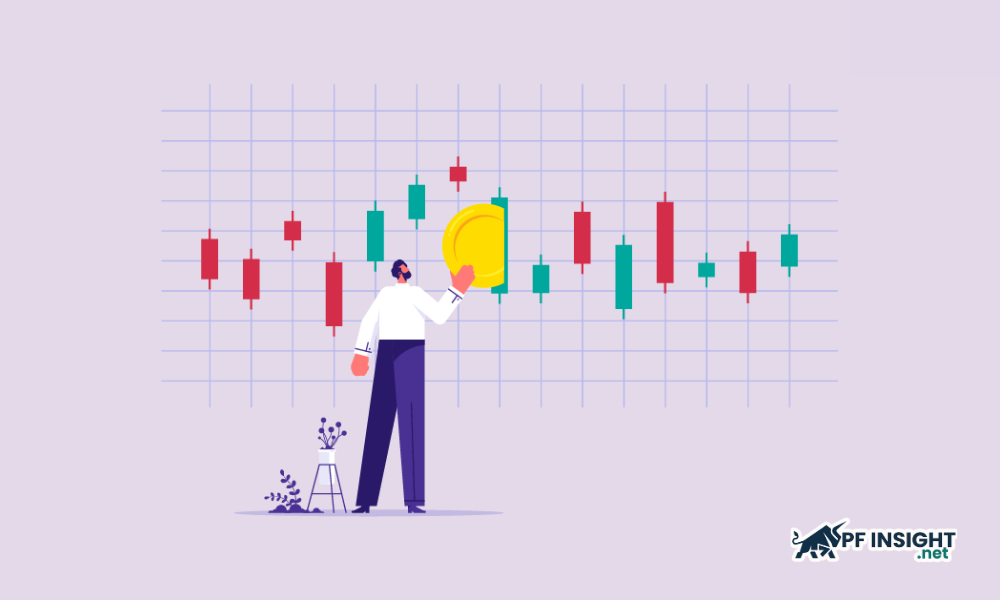
Although institutional trading activity is often concealed, large-scale buy and sell orders directly impact market structure. In institutional trading concepts, these impacts are referred to as institutional footprints, reflected in price reactions at key liquidity zones. This allows traders to identify areas where banks are entering or exiting the market.
- Order blocks: Price zones where large institutions accumulate or distribute significant trading volumes, often serving as strong price reaction points in the future.
- Liquidity zones: Areas on a chart where stop-loss and pending orders from a large number of traders are concentrated, becoming targets that large amounts of money often seek to exploit for liquidity.
- Session-based movements: High-probability price swings occur when major sessions like London or New York begin, a time when large institutions increase activity and boost volume.
- False breakouts / Judas swings: Rapid price movements designed to deceive the market, triggering a flurry of stop-loss orders from retail traders before the price reverses in the opposite direction.
Institutional order blocks and how traders read price action
Large order volumes are the most important indicator of institutional activity. In institutional trading concepts, these order volumes reflect where large amounts of money are intentionally accumulated or distributed. Prices often retest these areas, providing opportunities for traders to identify potential market directions.
- Bullish order block: A price range formed from the last bearish candle before the market breaks out strongly upwards, reflecting the process of large institutions quietly accumulating and preparing to push the price up.
- Bearish order block: The area originating from the last bullish candle before the price plunge, indicating that institutions have completed their distribution and begun to exert significant selling pressure on the market.
Liquidity and stop loss hunting by smart money
According to institutional trading concepts, institutions don’t trade randomly but actively seek liquidity. The market is often pushed to price levels that trigger a series of stop orders, providing enough volume for the bank to execute its strategy. Observing unusual price reactions helps traders identify this liquidity hunting process.
- Identify the peaks and troughs of the previous session, round price levels, or key price zones where stop-loss orders often accumulate.
- Observe for rapid breakouts across these areas, often accompanied by sharp fluctuations in a short period of time.
- Wait for signals of a price reversal or weakening, indicating that institutions have accumulated sufficient liquidity and are beginning to shift their market focus.
How large institutions drive market movements
In institutional trading concepts, large institutions play a leading role in the market by controlling liquidity and cash flow. Understanding how they operate helps traders interpret sharp price movements and anticipate traditional technical signals.
- False breakouts and market-deceiving price movements: False breakouts often occur when the price briefly breaks through a familiar resistance zone. This movement causes many retail traders to enter trades or have their stop-loss orders triggered. Shortly afterward, the market reverses sharply as institutions accumulate sufficient liquidity and begin pushing the price in their desired direction.
- Market traps and stop-loss sweep strategies: Stop-loss sweeps and liquidity traps often occur very quickly, concentrated around key price levels. Banks push prices above psychological thresholds to trigger a series of stop-loss orders, while simultaneously absorbing remaining limit orders. Only after sufficient liquidity is collected does the market show a clearer trend.
- Banks and the formation of crowd psychology in markets: Market sentiment is heavily influenced by how large institutions shape the expectations of the masses. Announcements and opinions are released when prices are at critical levels, forcing timid investors to exit positions early. Meanwhile, compelling narratives about long-term trends encourage the crowd to participate later, precisely when institutions have finalized their strategies.
Who are institutional traders in financial markets?
Institutional trading is not a single unified entity but comprises multiple groups with different strategies and objectives. Each type of institutional trader plays a distinct role in creating liquidity, leading trends, and stabilizing the market. Clearly differentiating between these groups helps traders gain a deeper understanding of how the market operates and why prices react differently in various contexts.
|
Type of institutional trader |
Primary role | Risk factor | Market impact |
| Hedge Funds | These strategies involve short selling, using high leverage, and exploiting derivatives to pursue large profits at high risk. | High risk, accompanied by opportunities for both large profits and significant losses. |
It has the potential to create significant price volatility, especially in markets with limited liquidity. |
|
Pension Funds |
Aiming for stable long-term growth in retirement asset management. | Risk is low to medium, focusing on stability rather than speculation. | Large-volume bond transactions help shape interest rates and the cost of government borrowing. |
| Mutual Funds | Individual investors allocate their capital to highly diversified portfolios of stocks and bonds. | Risk is moderate, depending on asset allocation. |
High trading volume often has a significant impact on stock price movements. |
|
Investment Banks |
Playing a role in IPOs, M&A, and conducting transactions on a private account. | The level of risk varies from moderate to high depending on the trading method. | IPOs and mergers and acquisitions have a significant impact on market trends and stock valuations. |
| Insurance Companies | The premiums collected are allocated to bonds, corporate debt, and stocks to create a stable source of profit. | Low risk level, prioritizing financial stability. |
This directly impacts long-term interest rates and the dynamics of the credit market. |
Comparison between retail and institutional trading
The difference between individual and institutional trading lies not only in the size of capital but also in strategy and influence on the market. These factors determine how each group participates in and reacts to price fluctuations.
|
Feature |
Institutional traders | Retail traders |
|
Capital size |
The fund is worth billions of dollars. |
Personal savings and investments |
| Market access | Conducting IPOs, futures trading, swaps, and private placements. |
The portfolio includes stocks, ETFs, and options contracts. |
|
Trading volume |
Large-scale transactions involving 10,000 or more shares. | These are small-volume transactions, usually under 1,000 shares. |
| Technology & tools | Advanced trading algorithms, underground trading platform, and direct market access (DMA) |
Retail trading applications and online brokerage platforms |
|
Market impact |
They have the ability to influence stock prices and shape market trends. | It is unlikely to change the stock price. |
| Cost Per trade | Receive a discount due to large-scale transactions. |
Transaction costs are higher due to the fixed fee structure. |
|
Regulation |
Stricter regulations must be followed. |
Subject to fewer control requirements |
Although individual investors do not possess the capital or tools of large institutions, they have the advantage of flexibility. They can quickly enter or exit the market without having to follow complex procedures. Conversely, financial institutions are bound by numerous legal regulations and strict control mechanisms.
Common trading strategies used by institutional traders
Based on institutional trading concepts, organizations apply well-designed trading strategies to handle large volumes of capital without disrupting the market. These strategies combine in-depth analysis of market structure, modern tools, and disciplined risk management to achieve sustainable results.

Momentum trading strategy
Momentum trading is a strategy that exploits established market trends to seek short-term profits. Traders focus on assets that are showing clear strength in a particular direction, rather than predicting reversal points. To apply this effectively, it’s necessary to closely observe price movements, the speed of movement, and confirmation signals such as increased trading volume or the RSI indicator showing sustained momentum.
Arbitrage trading strategy
Arbitrage trading clearly reflects the thinking of Institutional trading concepts, focusing on efficiency and probability rather than trend prediction. This strategy is based on identifying price discrepancies between related markets, contracts, or assets. Before the market has a chance to correct, traders quickly execute buy and sell orders to take advantage of the difference. Although it sounds simple, implementation requires a high-tech system, rigorous risk management, and the ability to respond in extremely short timeframes.
Quantitative trading strategy
In quantitative trading, investors use mathematical models and algorithms to identify opportunities in the financial market. Historical data is processed to find exploitable statistical patterns. This strategy minimizes the impact of sentiment and improves trading performance. Some typical methods include trend following, exploiting short-term price fluctuations, and applying artificial intelligence to optimize buy and sell decisions.
Long-term value investing strategy
Value investing is a core strategy in many institutional trading concepts, focusing on finding assets that are undervalued by the market relative to their intrinsic value.
Investors typically buy and hold for the long term, patiently waiting for the market to correct to a reasonable price level. This process is based on fundamental business analysis such as price-to-earnings ratio, profitability, financial leverage, and cash flow. Adhering to investment discipline helps reduce risk and generate sustainable profits over time.
Advantages and disadvantages of institutional trading
Institutional trading plays a crucial role in financial markets, offering numerous advantages in terms of liquidity and efficiency, but it also has several limitations that need to be considered.

Advantages of institutional trading
- Investment organizations typically employ professional trading teams that are well-trained and highly experienced, with the aim of optimizing investment performance.
- Thanks to their high level of expertise, institutional traders are able to develop and implement robust risk management strategies, helping to protect the interests of their clients.
- Superior analytical and valuation capabilities enable these organizations to execute transactions at more reasonable and efficient prices.
- This contributes to increased transparency in the management process and helps to allocate capital more optimally for investors.
- In addition, the operations of large trading institutions play a crucial role in providing liquidity, an essential element for the stable functioning of financial markets.
Disadvantages of institutional trading
- Organizations must operate within the strict regulatory framework of financial authorities, which increases costs and procedures.
- The large transaction size means that changing or exiting a position takes more time compared to individual investors.
- Large-scale institutional buying can amplify volatility and influence overall market trends.
Conclude
Overall, institutional trading concepts highlight the clear differences between institutional and retail trading. With superior pricing capabilities, high liquidity, and long-term strategies, institutions play a significant role in shaping market trends. However, their large scale also exposes them to systemic risks and strong spillover effects. According to pfinsight.net, understanding these characteristics helps investors evaluate the market more comprehensively.