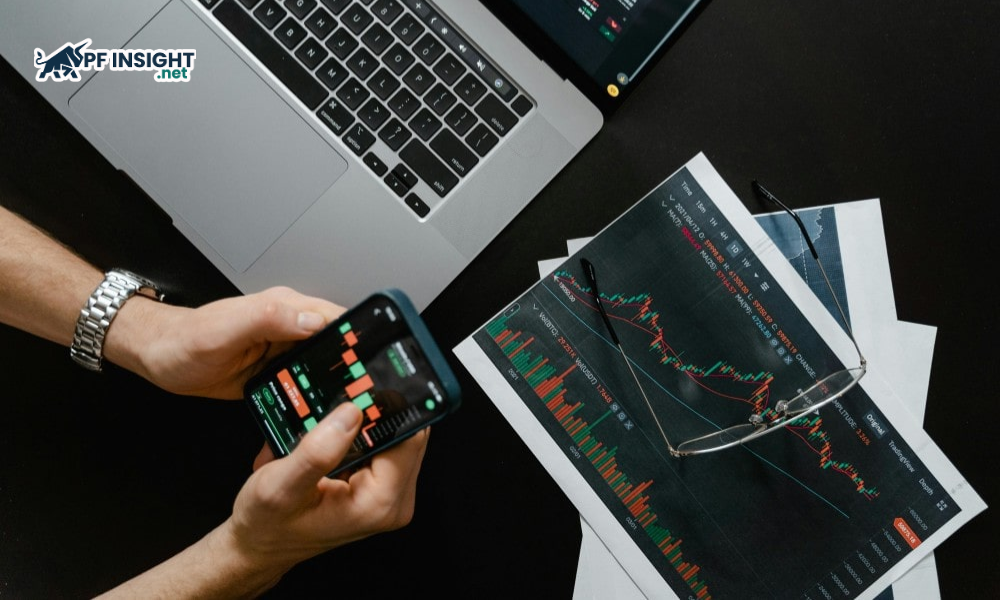
Day trading has become one of the most popular trading styles among those who prefer a fast pace and the potential for same-day profits. Instead of holding positions overnight, day traders focus on intraday price movements, the small, frequent fluctuations that occur throughout the trading session. By understanding how the market moves minute by minute and learning to capitalize on these short-term swings, traders can generate consistent returns within a single trading day.
In this article, PFinsight.net will break down what day trading is, how intraday price movements work, and how traders take advantage of these micro-movements to trade more effectively.
- A step-by-step guide to Copy Trading for new traders
- What is spot trading and how does it work in 2025
- Instant funding forex best practices for risk management and scaling up
What is day trading?
Day trading is a trading approach in which traders open and close all positions within the same trading session and never hold trades overnight. The primary goal of a day trader is to capture the small price fluctuations that occur throughout the day, whether these movements are triggered by news releases, shifts in market liquidity, or technical reactions at important price levels.
Day trading is commonly used in highly liquid markets such as forex, stock indices, gold, crypto, and futures. Because these markets move continuously, day traders must monitor price action closely, manage risk with precision, and make quick decisions to maintain consistent performance.
Key characteristics of day trading include:
- High trade frequency
- Short holding times (from a few minutes to a few hours)
- A focus on short-term volatility
- A need for discipline, speed, and a clearly defined strategy
Understanding intraday price movements

Intraday price movements are the short-term fluctuations that occur within a single trading session. These movements are the foundation of day trading because every intraday strategy depends on identifying and exploiting these short-term shifts in price. Throughout a trading day, price does not move randomly. It reacts to several key factors, including:
Liquidity and session-driven order flow: Each trading session (Asia, Europe, and the United States) has different levels of liquidity. The European and U.S. sessions typically generate stronger volatility because larger capital flows enter the market, creating more trading opportunities.
Economic news and macro data: Events such as NFP, CPI, FOMC, and PMI can create rapid and extreme price movements within seconds. Day traders need to know when these releases occur and plan their risk management accordingly.
Time-of-day market behavior: Certain instruments have distinct intraday patterns. For example:
- XAUUSD often becomes highly volatile during the New York open.
- EURUSD moves most actively when the European and U.S. sessions overlap.
Understanding these patterns helps day traders choose the best time to participate in the market.
Technical levels and market reactions: Support, resistance, trendlines, order blocks, and liquidity zones have a strong influence on intraday movement. Price commonly bounces or breaks aggressively at these key levels.
Short-term market psychology: Profit taking, stop-loss cascades, FOMO, and panic selling all contribute to constant intraday swings. Traders who read short-term sentiment accurately often gain a significant advantage.
In summary, intraday price movements are not random. They reflect the flow of capital, the behavior of institutional players, and the collective reaction to technical levels and news events. By understanding these dynamics, day traders can identify higher-quality trade setups and improve overall performance.
How day traders capitalize on these movements

Identify micro-trends
Day traders monitor small intraday trends that may last from a few minutes to a few hours. When price forms higher highs and higher lows or lower highs and lower lows, traders take advantage of this momentum to enter trades in the direction of the short-term trend.
Use volatility spikes
Volatility spikes often occur during news releases, market opens, or at high-liquidity zones. Day traders use these sharp movements to enter quickly and exit quickly, capturing short bursts of momentum.
Trade around support and resistance
Levels that price tests repeatedly during a session often turn into intraday support or resistance. When price bounces or breaks these levels, traders can look for short-term entry opportunities.
Scalp small price inefficiencies
Some day traders use scalping techniques to exploit small price inefficiencies, especially in highly liquid instruments such as XAUUSD or EURUSD.
Monitor order flow and liquidity zones
Areas with heavy pending orders or concentrated liquidity tend to generate fast movements. Day traders watch order flow closely to anticipate the next direction when price interacts with these zones.
Use momentum confirmation tools
Indicators such as VWAP, RSI, MACD and volume help confirm the strength of intraday moves. This supports traders in timing entries correctly and avoiding trades during weak market conditions.
Manage positions aggressively
Because intraday markets move quickly, day traders often use tight stop losses, take profits early, or apply trailing stops to lock in gains as price moves in their favor.
Day trading strategies designed for intraday moves
Below are the most commonly used day trading strategies for taking advantage of intraday price movements. Each strategy is designed to capture short-term fluctuations within a session while allowing traders to enter and exit quickly and manage risk effectively.
Trend-following intraday
Traders follow micro-trends within the session by analyzing market structure or using fast EMAs such as EMA 9 and EMA 21. Entries are typically taken when price pulls back to dynamic support with a confirming signal.
Breakout strategy
This approach focuses on tight consolidation zones, key levels or areas of confluence. Traders enter when price breaks a support or resistance level with strong momentum, increased volume, and clear directional bias.
Scalping
Scalpers target small, frequent price movements on lower timeframes such as M1 to M5. They prioritize instruments with tight spreads and high liquidity such as EURUSD or XAUUSD. Trades usually last only a few seconds to a few minutes and rely on very tight stop losses.
VWAP strategy
VWAP is used to identify the average price of the day. Traders commonly apply two techniques:
- VWAP bounce: price touches the VWAP and bounces in the direction of the prevailing trend
- VWAP reversion: price moves far away from the VWAP and returns to the mean
Range trading
When the market trades sideways, traders buy at intraday support and sell at intraday resistance. This technique works well during sessions with limited news or when liquidity is reduced.
Common risks of day trading beginners must avoid
Day trading can generate fast profits, but for beginners it is also one of the riskiest trading styles. Below are the most common mistakes that cause new day traders to lose money early on:
Overtrading because the market moves constantly
The high number of intraday opportunities makes beginners enter too many trades. This leads to higher transaction costs, loss of focus, and lower decision quality.
Not using stop loss or placing stops too wide
Day trading requires tight stop losses and strict risk control. New traders often “hope the price will come back,” allowing small losses to turn into large ones.
Trading during low-liquidity, high-spread conditions
Late Asian sessions or the period before major news events often have wider spreads. Beginners usually do not notice this and get hit with slippage, causing immediate losses.
Not understanding session behavior
Each trading session has different characteristics. London is highly active, New York is volatile, and the Asian session is generally slow. Entering during the wrong session often results in poor price movement and unnecessary losses.
FOMO during strong price moves
Beginners tend to enter trades after the price has already moved far from a safe entry zone. This leads to buying tops, selling bottoms or getting caught in immediate reversals.
Using excessive leverage to chase quick profits
High leverage magnifies every small intraday move into a major risk. Many beginners blow their accounts on a 5 to 10 pip fluctuation.
Lack of a clear intraday trading plan
Without predefined entry and exit rules, targets, and risk levels, new traders make emotional decisions, especially when the market is moving fast.
Conclusion
If you are working to improve your day trading skills, start with strong foundations, trade with a clear plan, and continuously refine your approach based on real market data. We will be here to support you with reliable guidance that helps you trade smarter each day.
Follow the Knowledge Hub for the latest insights and updates.