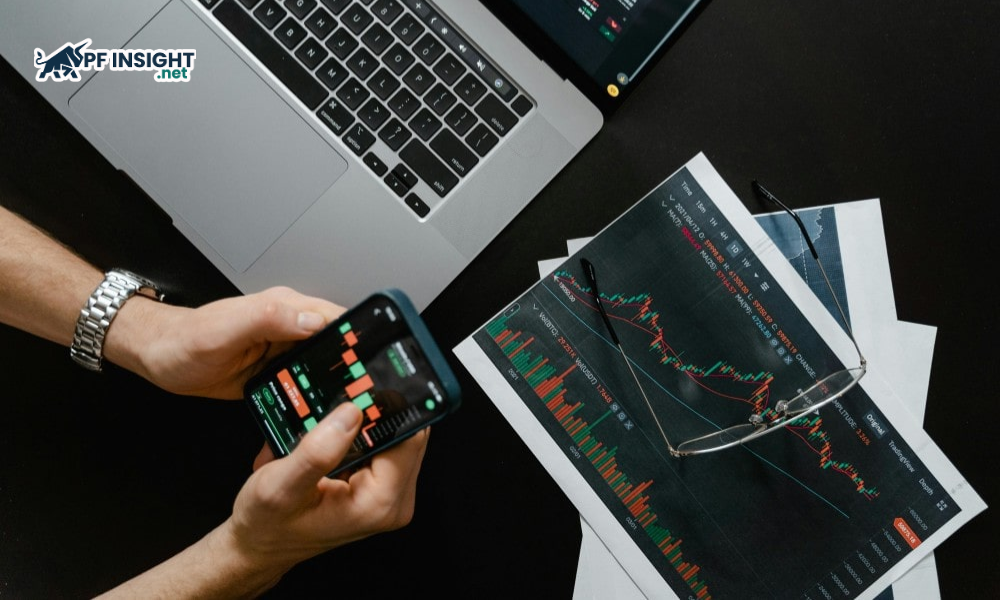
Index trading has become increasingly popular thanks to its stability, predictable market movements, and lower risk compared to trading individual stocks. However, to get started the right way, traders need to understand what an index truly represents, how its price is formed, and the factors that influence its volatility.
With PF Insight, you will learn trading indices for beginners by covering all the essential foundations and understanding how indices actually work in the financial markets.
Stock indices are benchmarks that represent the performance of a group of stocks. Instead of monitoring individual tickers, indices allow traders to see the overall picture of the market or a specific sector. This is why indices are considered important tools for measuring economic health and identifying broader financial market trends.
An index is composed of multiple stocks, usually from the largest or highest-capitalized companies in a market. For example, the S&P 500 represents 500 leading U.S. companies, while the NASDAQ 100 focuses heavily on technology giants. Each index follows its own selection criteria, which creates unique market behavior and volatility characteristics.
For traders, index trading offers three major advantages: diversified risk, lower cost compared to buying individual stocks, and a more accurate reflection of market direction. This makes indices an attractive choice for beginners who want to approach the market in a structured, safer, and more predictable way.
How index trading works
The fact that stock indices cannot be directly purchased or sold is among the first things newcomers must comprehend.
One of the first things beginners need to understand is that stock indices cannot be bought or sold directly. You cannot “buy the S&P 500” or “sell the NASDAQ 100” in the same way you would trade an individual stock. Instead, traders use derivative products that mirror the price movement of an index. Below are the three most common ways to trade indices:
CFDs (Contracts for Difference)
CFDs are the most popular choice for beginners because they allow you to:
Trade both buy (long) and sell (short)
Start with a small amount of capital
Access them through most forex brokers
A CFD mirrors the real-time price of an index, allowing traders to profit from price movements without owning any actual stocks.
Futures
Futures contracts are traded on major exchanges such as the CME. They are widely used by professional traders because they offer:
High liquidity
Very low latency
Suitability for large position sizes
However, futures usually have higher costs and require more capital than CFDs.
ETFs (Exchange Traded Funds)
ETFs track the value of an index by holding the underlying stocks. For example, SPY is an ETF that tracks the S&P 500. ETFs are suitable for:
Long-term investors
People who want to hold real assets
Traders who do not focus on short-term speculation
The price of a stock index is created from the prices of the individual stocks inside that index. However, each index uses a different calculation method. Some indices are weighted by market capitalization, meaning larger companies have a bigger impact on the index. Others give each stock an equal weight, and some are price-weighted, where stocks with higher prices influence the index more. Because of this, when just a few major companies move strongly, the entire index can rise or fall with them.
This is important for traders because understanding how an index is constructed makes it easier to anticipate market movements, especially when economic news affects key companies. It also helps you choose the right trading product, such as CFDs, futures, or ETFs, and apply risk management more effectively. This is essential knowledge that every trader should understand before trading indices.
Key concepts beginners must understand
When you start trading indices, it is essential to understand a few key concepts that explain how the market moves and help you avoid common beginner mistakes. Here are five core fundamentals:
Index weight: Not all stocks inside an index have the same impact. Major indices such as the S&P 500 or NASDAQ 100 use market-cap weighting, which means large companies like Apple, Microsoft, and Amazon can move the entire index with a single piece of news. Understanding index weight helps traders predict index reactions more accurately.
Volatility: Indices can become highly volatile during market open, major news releases, or active trading sessions such as the US and European sessions. Beginners should understand the volatility profile of each index to choose better entry times and avoid noisy market conditions.
Session timing: NASDAQ 100 and S&P 500 tend to move strongly during the US market open, while DAX40 becomes more active when Europe opens. Knowing when each market is most active helps you trade in sync with the market rhythm and avoid entering at the wrong time.
Market sentiment: Indices reflect the overall mood of investors. When the market is optimistic, indices usually rise steadily. When fear increases, indices can drop sharply. Tracking sentiment helps traders understand the broader context and make more informed decisions.
Economic events: Major announcements such as FED interest rate decisions, CPI, nonfarm payrolls, GDP reports, or earnings from large corporations can significantly impact index prices. Beginners should always check the economic calendar to avoid unexpected volatility that could wipe out their accounts.
Popular indices to trade
You don’t have to follow a lot of markets while trading indexes.
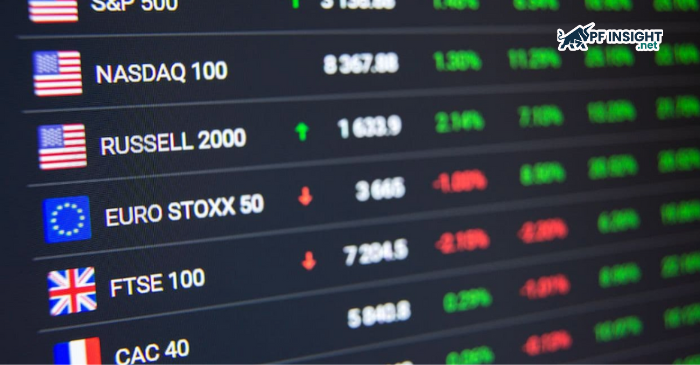
When trading indices, you do not need to follow too many markets. A small group of major indices is more than enough to understand global trends and start trading effectively. Below are the most popular indices for beginners:
S&P 500 (United States): A great choice for both day traders and swing traders. It represents the 500 largest companies in the US and offers stable, steady movement.
NASDAQ 100 (United States): Focused on major technology companies such as Apple, Microsoft, Google, and Nvidia. NASDAQ tends to be more volatile than the S&P 500, which makes it attractive for traders who enjoy fast-moving markets, although it requires stronger risk management skills.
Dow Jones (United States): Known for its stability, this index is suitable for beginners who prefer slower and more predictable price action.
DAX40 (Germany): The main European index, representing 40 of Germany’s largest companies. DAX shows strong volatility during the European session, especially during the first one to two hours after the market opens.
FTSE 100 (United Kingdom): Made up of the 100 largest companies in the UK. It is ideal for traders who want to trade the European session with moderate volatility.
All of these indices are supported by most reputable brokers and offer high liquidity, low spreads, and fewer irregular price movements, making them excellent choices for beginners.
How to start trading indices as a beginner
If you are new to index trading, the most important thing is not to look for complex strategies but to understand the essential steps that help you trade safely and with clear direction. The first thing you should do is choose a reliable broker that supports major indices such as the S&P 500, NASDAQ 100, Dow Jones, or DAX40. A quality broker will give you low spreads, fast execution, and suitable leverage to help you avoid unnecessary risks.
Once you have selected a broker, you need to choose the right trading instrument based on your goals. Most beginners start with CFDs because they require smaller capital, offer flexibility, and are easy to practice with. If you are more experienced, futures provide higher accuracy and liquidity, while ETFs are suitable for traders who prefer long-term trends without placing too many trades.
Risk management is the key factor that determines whether you can survive in the market. Before entering any position, decide how much of your account you are willing to risk, set a clear stop-loss, and avoid trading during high-volatility events caused by economic news. New traders often get caught in the fast and aggressive movements of NASDAQ or DAX during the opening minutes, but this is actually the easiest time to lose money if you are not familiar with watching the market.
Finally, you need a simple strategy to begin with. This can be trading with the trend, using moving averages to identify market momentum, or combining support and resistance to find suitable entry points. Once you are familiar with the market rhythm, you can gradually upgrade your strategy, but at the beginning, it is important to keep everything simple to build a solid foundation.
Conclusion
Index trading is one of the simplest ways for beginners to approach the financial markets because it does not require analyzing individual stocks and instead reflects the overall strength of an entire economy. When you understand core concepts such as index weighting, volatility, session timing, and the impact of economic news, you will have a solid foundation for reading the market more accurately. Trading indices for beginners is not complicated when you focus on the essential fundamentals from the very beginning.