After years of rapid growth, the prop trading industry entered 2025 amid a wave of new models, intense price competition, and aggressive expansion by funding firms. However, rather than continuing to expand horizontally, 2025 forced the industry to restructure from within.
This was not a collapse but a necessary phase of consolidation, in which unsustainable models were filtered out, while serious firms were compelled to upgrade their operational mindset, risk management frameworks, and trader evaluation methods.
When growth no longer masked structural problems
During 2024 – 2025, a large number of prop firms withdrew from the market or shut down entirely. The common issue was not a lack of market demand but imbalanced business models:
Heavy reliance on evaluation fees
Thin profit margins
Insufficient investment in risk management systems and data infrastructure
Operations driven more by marketing than by control of trading behavior
When discounts became the primary competitive tool, user growth no longer equated to sustainable growth. At scale, managing traders proved far more challenging than attracting them.
By 2025, the industry reached a clear realization: without system-level risk control, any growth model will ultimately undermine itself.
Shifting focus from marketing to behavior and risk
The biggest turning point in 2025 lies in how prop firms redefine their core problem. The challenge is no longer how to help traders pass evaluations but how to identify traders who can sustain performance over the long term.
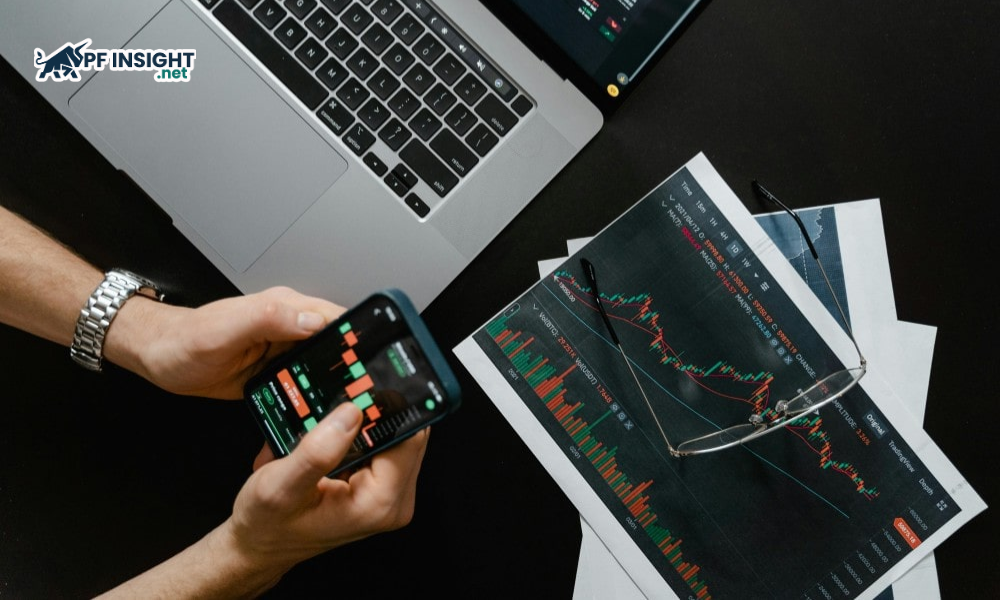
AI-based risk management and trader behavior monitoring in proprietary trading firms.
Several issues have become increasingly clear:
Organized challenge-passing services
Synchronized trading across multiple accounts
Sophisticated rule circumvention based on probability
Security and impersonation risks
Rule-based control systems quickly revealed their limitations. In response, many firms have begun shifting toward behavior and context analysis, using AI not for trading, but to:
Detect behavioral correlations across accounts
Monitor changes in trading style after passing evaluations
Assess consistency rather than isolated rule violations
Even gamification has taken on a new role. Instead of encouraging higher trading activity, it is now used to shape behavior, promote discipline, control drawdowns, and reduce overtrading.
Traders are also forced to shift their mindset
Alongside the maturation of prop firm systems, trader mindsets have begun to diverge more clearly. One reality is becoming increasingly difficult to deny: a strategy designed to pass evaluations is not the same as a strategy designed to sustain payouts.
From mid-2025 onward, this distinction has become clearer than ever:
Trading styles focused on passing challenges tend to involve higher volatility, greater risk, and short-term optimization.
Trading aimed at sustainable payouts prioritizes consistency, lower trading frequency, and tight drawdown control.
Platform-level analytics, journaling tools, behavioral scoring, and risk alerts have made these differences harder to conceal. Technology does not make trading easier. It forces traders to become more disciplined.
At the same time, expansion into crypto, futures, and multi-asset environments introduces new demands on risk models, especially under conditions of high volatility and continuous trading. Regions such as APAC and Latin America have emerged as key growth drivers, but they also bring higher requirements for localization and operational execution.
Conclusion
The year 2025 did not slow the prop trading industry down. Instead, it forced the industry to enter a phase of maturity. Marketing is no longer a sustainable advantage when growth is not supported by a solid operational foundation. Risk management has become a matter of survival, behavioral analysis increasingly defines the credibility of each model, and trading discipline is now valued on the same level as strategy.
Prop trading remains a legitimate pathway to market access, but after 2025, the conditions required to survive and grow have become clearer than ever, for both firms and traders alike.